Among the organs of the body, none have been as contentious as the heart—both in religious texts and scientific discoveries. The Holy Quran, in a description that continues to challenge human understanding, presents the heart as the center of intellect, comprehension, and the perception of truth. In numerous verses, it is stated that the heart “sees,” “understands,” “is guided,” “deviates,” and is even “sealed.” But are these merely metaphors? Is the Quran speaking purely of a spiritual truth, or does it hint at something deeper—a physical dimension of the heart?
Perhaps the clearest reference to the heart’s physical nature is the verse: “Allah has not placed two hearts within any man’s chest” (Quran 33:4). Here, the Quran explicitly emphasizes the singular, unified existence of the heart within the human body, describing it as a physical organ within the jauf (the chest cavity). Even more striking are the words of Imam Ali (AS) in Nahj al-Balagha, where he refers to the heart as “a piece of flesh suspended within a network of veins—one of the most astonishing things, for within it lies both the source of wisdom and its opposite.” This description highlights the heart’s duality: it is both a locus of guidance and a potential site of misguidance. While many classical exegetes interpret this as purely spiritual, modern cognitive sciences reveal an astonishing truth: the heart is not merely a pump—it plays a role in perception, emotion, decision-making, and even cognition.
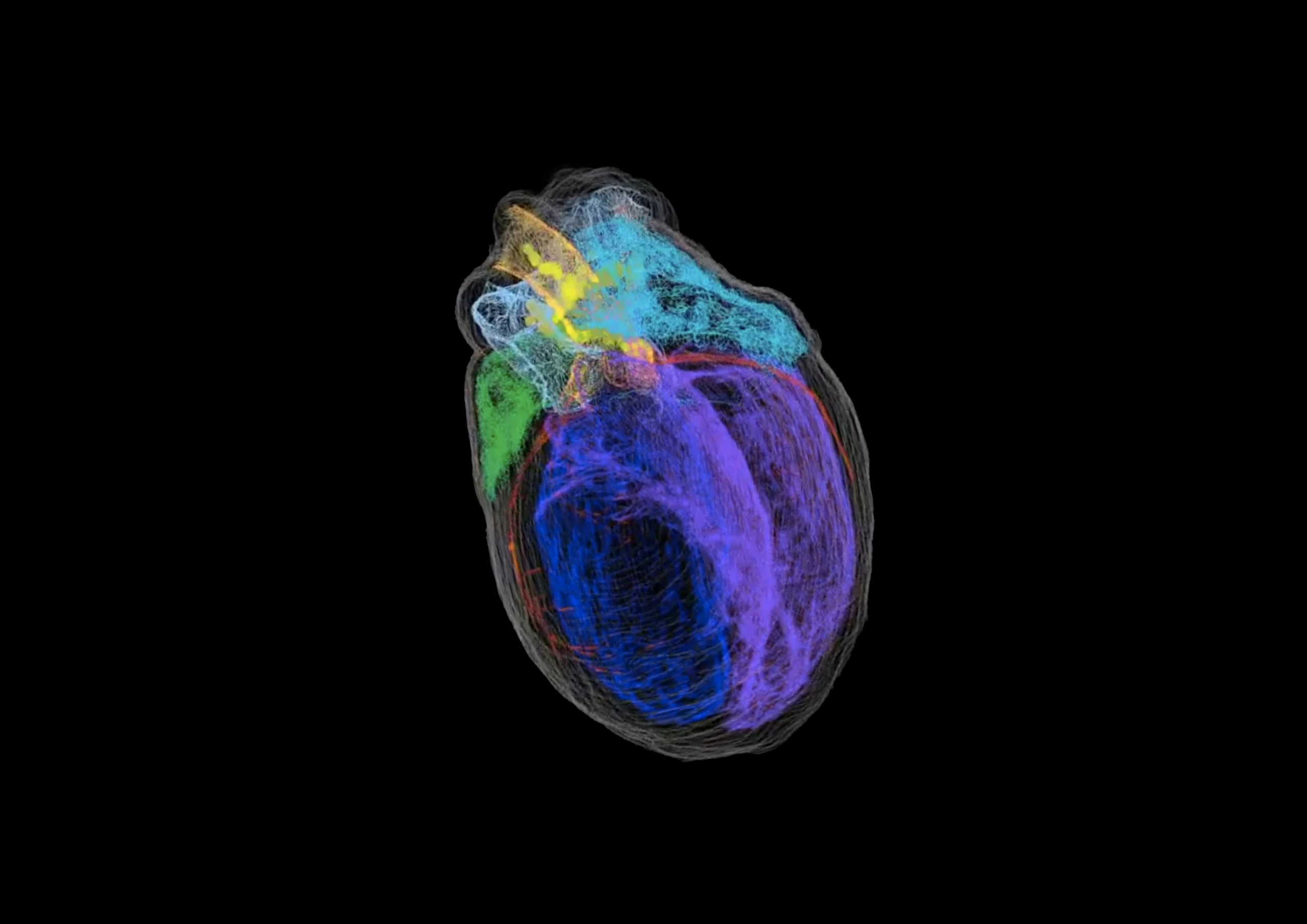
In ancient times, philosophers and physicians, including Aristotle, regarded the heart as the primary center of cognition and decision-making. However, after William Harvey’s discovery of blood circulation in the 17th century, this view radically shifted, and the brain was established as the undisputed command center of the body. The earlier beliefs about the heart’s cognitive role were largely dismissed. Yet today, neuroscience has shown that the equation is not so simple. The discovery of over 40,000 neurons in the heart, its independent neural processing, and its ability to send signals to the brain that influence emotions and decisions all suggest that the heart is more than a physiological organ—it may even function as a “second brain,” engaged in continuous dialogue with the cranial brain.
One groundbreaking study, conducted using optogenetics, precisely demonstrated that altering heart rate—without any brain involvement—can directly activate anxiety-related neural circuits. Scientists stimulated heart cells to increase their beating rate while keeping brain activity unchanged. The result was astonishing: the elevated heart rate alone triggered anxious behaviors. This means the heart is more than a pump; it is an active agent in regulating emotions.
But the story does not end there. In a study published in Science, researchers accidentally discovered that the olfactory bulb in the brain contains piezoelectric receptors capable of sensing mechanical vibrations. This finding revolutionized our understanding of information processing in the brain, revealing that it does not rely solely on electrochemical signals but also interprets mechanical vibrations—such as those generated by the heart’s rhythm. In other words, the heart not only sends biological signals but may also influence the brain through rhythmic vibrations at a level not yet fully understood.
Further complicating the relationship between the heart and cognition is the concept of Heart Rate Variability (HRV)—a measure of the nervous system’s flexibility in regulating heart rhythm. Studies show that higher HRV correlates with better cognitive function, decision-making, and emotional regulation, while reduced HRV is linked to depression, anxiety, and even dementia. Recent experiments on genetically modified mice with elevated heart rates and lower HRV revealed altered brainwave patterns, suggesting that cardiac rhythms may structurally and functionally reshape the brain beyond mere metabolic effects.
What makes these discoveries even more astonishing is that many of them have emerged only in the last three to four years. Experimental studies demonstrating the heart’s causal role in cognition and emotion were predominantly published in 2023 and 2024, indicating that science is currently re-examining foundational principles once considered incontrovertible.
Perhaps the most controversial topic, however, is heart transplantation. Numerous reports describe recipients experiencing unexplained changes in emotions, preferences, or even fragmented memories resembling those of their donors. Some develop sudden affinities for music they previously disliked, cravings for foods they never ate, or even flashes of unfamiliar memories. While no definitive scientific explanation exists, these phenomena raise profound questions: Could information beyond genetic coding be stored in cardiac cells? Does the heart possess a form of memory?
Collectively, these findings suggest that the Quran may have alluded to a truth 1,400 years ago that science is only now uncovering. When scripture describes the heart as the center of guidance, intellect, and even deviation, should we dismiss it as mere metaphor? Or could there be a layer of biological reality embedded within these verses—one that science has yet to fully unravel?
Admittedly, definitive answers remain elusive. But one thing is certain: the heart plays a far greater role in human behavior, emotion, and cognition than previously imagined. These revelations will profoundly impact not only medicine and neuroscience but also philosophy and theology. And perhaps, as the Quran reminds at the conclusion of its scientific parables: “Surely in this is a reminder for those of understanding.”
Call for Submissions:
We invite researchers and scholars to explore these intersections of theology, neuroscience, and philosophy. Submissions can be made through the project’s official website. Join us in uncovering the mysteries of the heart—both as a physical organ and a metaphysical marvel.