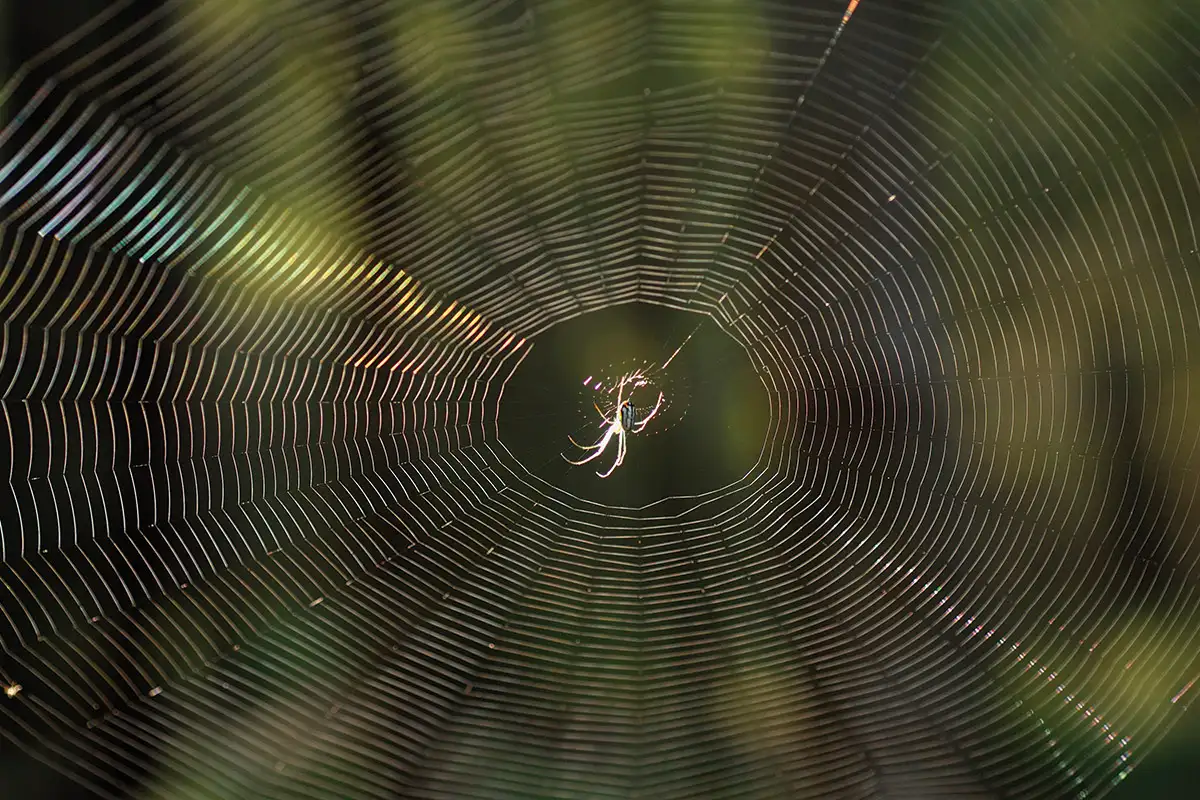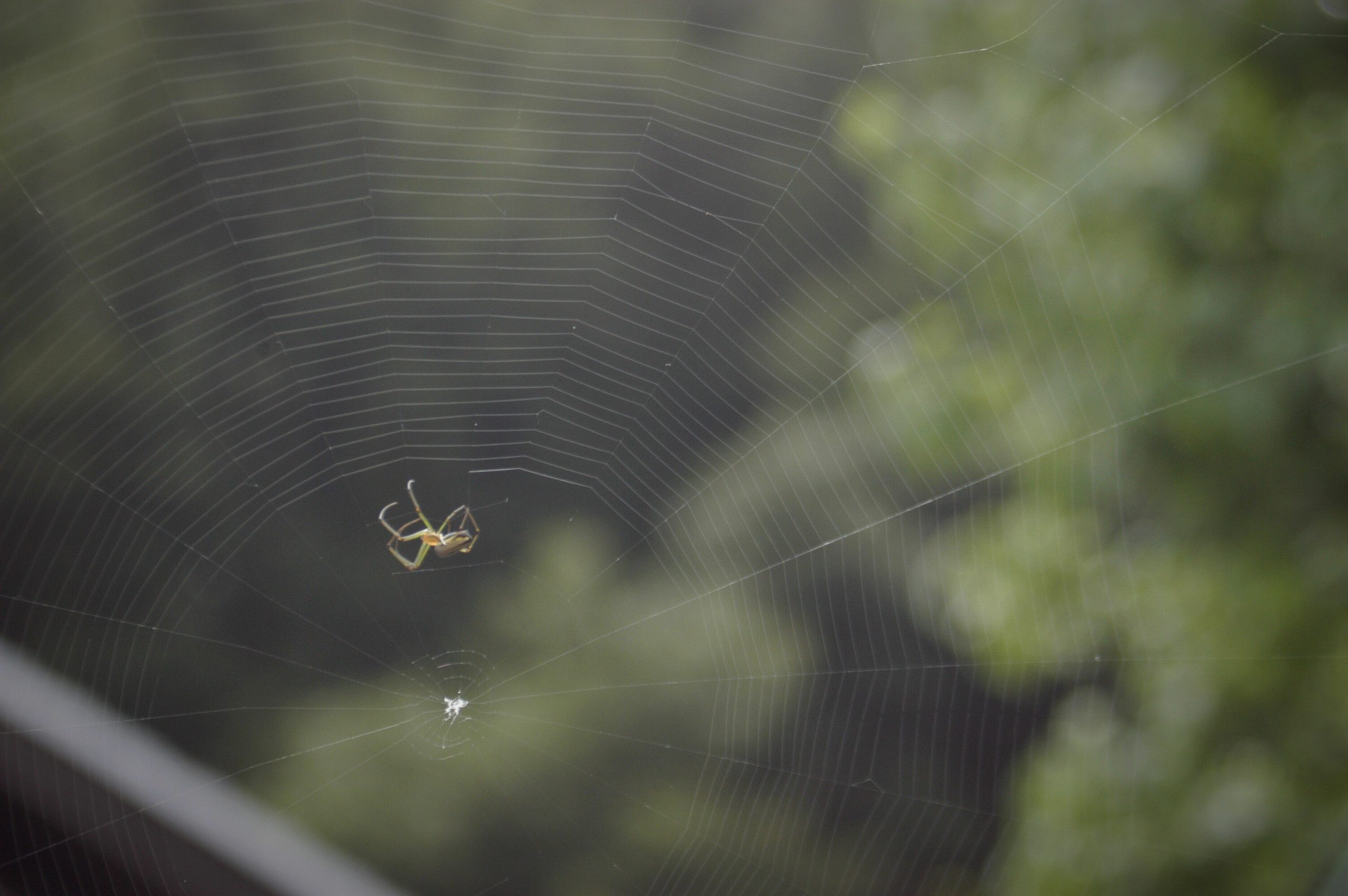
The Holy Quran presents a profound imagery in this verse, depicting the spider’s web in a way that may initially appear scientifically paradoxical:
“The example of those who take allies other than Allah is like that of the spider who takes a home. And indeed, the frailest of homes is the home of the spider, if they only knew.” (29:41)
From a biological perspective, the spider’s web is one of nature’s most astonishing feats of engineering. Its silk ranks among the strongest known biological materials—surpassing steel in tensile strength relative to its negligible weight, while its exceptional elasticity allows it to endure extreme tension without breaking. Yet, the marvel of the spider’s home lies not merely in the durability of its threads but in the spider’s own construction process.
Like a living 3D printer—or even 4D, if we account for the dimension of time and the dynamic movements of the spider—it weaves its silk in multiple directions, meticulously managing the intricate architecture of its web with extraordinary precision. Throughout this process, the spider maintains perfect balance, controls the weaving path with exactitude, and executes movements so harmonized and calculated that it resembles an engineer deploying an advanced algorithm to build an entirely intelligent structure. Even mid-construction, it can adapt to environmental changes, adjusting the web’s design to suit new conditions.
This living architecture, crafted from one of the most advanced biological materials, is paradoxically the frailest of structures on a larger scale. The slightest touch, a drop of rain, or a gentle breeze can effortlessly dismantle its elaborate framework. In its own microcosm, the spider is a formidable hunter and the architect of an engineering masterpiece, yet in a broader context, its home stands as the most ephemeral structure in nature.
Here, the concept of “scale of power” becomes evident. Within its own domain, the spider’s web is resilient, but against the vastness of the greater world, it is nothing. Anything besides Allah—no matter how seemingly powerful in human terms—proves frailer than the spider’s web when measured against divine might.
This Quranic analogy follows verses recounting the fate of ancient civilizations like ‘Ād and Thamūd. These societies erected monumental structures and sophisticated engineering marvels that awed their contemporaries. ‘Ād built towering cities with lofty pillars, believing themselves invincible, while Thamūd carved dwellings into mountains, convinced that even earthquakes could not uproot them. Yet, just as the spider’s web—despite the inherent strength of its silk—collapses under a greater force, these civilizations vanished in an instant.
Pharaoh, relying on his unmatched military might; Qārūn, trusting in his inexhaustible treasures; and Hāmān, wielding deception and political mastery—all appeared invincible within their limited spheres. But before divine power, what they built and depended upon proved more fragile than a spider’s web. This is the truth the Quran emphasizes: any power relied upon besides Allah will crumble before absolute might.
Yet this verse is not merely a warning; it is an invitation to scientific inquiry and profound reflection. Allah concludes the verse with “if they only knew” (29:41) and reinforces in verse 43: “And none will grasp it except those of knowledge.” Understanding this analogy requires knowledge. One unaware of the spider’s silk properties, the engineering of its web, or its extraordinary hunting and spatial abilities will fail to grasp the apparent paradox. But those who recognize that this home, despite its sophistication, is unstable on a grander scale will comprehend the verse’s deeper meaning.
Here, the Quran does not merely call to monotheism—it urges us to seek knowledge, reflect, and study the laws of nature. The repeated emphasis on “knowledge” in these verses demonstrates that only through learning can such parables be truly understood. Allah encourages us to examine the biological and engineering marvels of His creation, so that through understanding their complexities, we may attain a deeper appreciation of divine wisdom. These verses are not just spiritual guidance but also a pathway to scientific exploration and discovery.
Just as the spider’s web is an unparalleled marvel in its own world yet the frailest of homes before a greater force, so too is any power, wealth, or deception relied upon besides Allah. It may seem unshakable within its limited realm, but against a superior power, it is rendered worthless and shattered. This is the lesson the Quran imparts—by calling us to knowledge, reflection, and the study of nature, it teaches us the ultimate truth of reliance on the Divine.