Evaluating the Impact of Islamic and Non-Islamic Microeconomic Policies on Economic Justice Using Complex Systems Simulation Tools
Despite previous statistical studies that have deemed the impact of Infaq (Islamic charitable giving) on poverty reduction negligible, this research demonstrates that Infaq, as an Islamic economic policy, not only significantly reduces poverty but also prevents income stagnation in society—a major step toward achieving economic justice."
In today’s world, where economic inequalities stand as one of the fundamental challenges facing societies, finding practical solutions to achieve social justice appears more critical than ever. The present study employs advanced agent-based simulation methods to examine the effects of Infaq within Islamic economics, yielding novel and insightful results. The findings not only highlight the superiority of Islamic economic policies in reducing poverty and wealth redistribution but also provide a scientific response to existing doubts regarding the macroeconomic efficacy of Infaq. By integrating contemporary knowledge with religious teachings, this research presents a pioneering model for interdisciplinary studies in Islamic economics, opening new horizons for justice-oriented economic policymaking.
Infaq, as an Islamic economic policy, not only significantly reduces poverty but also sustains economic mobility within society by preventing income stagnation. However, in inflationary economies, its impact on reducing the income gap of the middle class remains limited.
Abstract
This study employs a simplified agent-based simulation model to examine the extent and mechanisms through which various microeconomic policies, including charitable giving (Infaq), influence income distribution in both inflation-free and inflationary economies. Multiple scenarios of financial, charitable, and hybrid transactions were designed, simulated, and compared. Contrary to prior statistical studies in this field, the results demonstrate that Infaq significantly reduces poverty and eliminates the lowest income deciles, shifting poorer deciles toward middle-income brackets and fostering economic balance in society. More importantly, Infaq not only alleviates poverty but also prevents income stagnation. As this study reveals, other proposed policies fail to simultaneously achieve both objectives. However, Infaq does not substantially mitigate the widening income gap within the middle class caused by inflation.
Keywords: Infaq, income distribution, complex systems, agent-based simulation, economic justice
1. Introduction
Economic system simulation is a powerful tool for analyzing and understanding the complex behavior of such systems. By developing appropriate mathematical and computational models, various economic strategies can be simulated to predict future system behavior. Thus, simulation tools enable testing the impact of different economic policies and selecting optimal solutions. Applications include forecasting economic crises, assessing external shocks, designing monetary and fiscal policies, analyzing financial markets, and risk management. Simulation methods are highly valuable due to their flexibility in understanding system dynamics, though they have limitations that must be considered. Combining simulation with empirical methods—grounded in real-world data—can enhance the accuracy and reliability of results.
This study investigates the impact of microeconomic policies on income justice, a key macroeconomic indicator. Economic justice has long been a human concern, yet its definition—even in economic terms—remains ambiguous, with diverse theories across schools of thought. Unfortunately, some theories have been exploited by power centers and capitalism to justify wealth accumulation. Hence, a precise, scientific approach to this topic is critical, and scholarly insights in this field yield significant outcomes.
Silver (1989) categorizes theories of economic justice into three groups (Pilehforoosh, 2018):
Resource-based theories: Advocate equal access to public resources and opportunities (e.g., Locke (1689), Dworkin (1989), Roemer (1982), Fleurbaey (1995), Rawls (1986)).
Process-based theories: Emphasize fair methods of property acquisition (e.g., Hayek (1960), Nozick (1974), Buchanan, Leventhal, and Michael (1971)). Islamic jurisprudential theories (Nematí, 2013) also fall here.
Outcome-based theories: Focus on equitable distribution of wealth and income (e.g., Bentham, J.S. Mill, Posner (1981), Baumol (1982), Varian (1974), Frank (1984), Scotler (1985), Eyvazzadeh (2010), Seyednorani & Khanduzi (2016)).
This study adopts the third perspective but demonstrates how micro-level processes (aligned with the second view) inevitably yield macro-level outcomes. Outcome-based theories measure justice using macroeconomic indicators like efficiency, wealth, utility, welfare, and social balance—some quantifiable, others qualitative. A key quantifiable indicator, central to this study, is income distribution.
After defining justice indicators, policies and tools (e.g., taxes, productivity, Infaq) must be evaluated. This requires a model linking these tools (inputs) to justice indicators (outputs). Such a model estimates their impact on economic performance and justice metrics, enabling data-driven policy decisions.
In Iran, statistical models (e.g., fitted functions) have dominated studies linking social justice indicators to economic variables. However, as discussed later, these are inadequate for complex systems. Advanced tools like interpretive structural modeling (ISM), DEMATEL, ANP, neural networks, machine learning, cellular automata, and agent-based simulation are better suited for complex economic systems.
This paper examines Infaq’s role in income distribution using a simplified agent-based model alongside other economic exchange methods. Agent-based modeling is highly effective for simulating complex systems, representing macro-level indicators as emergent behaviors from micro-level interactions.
The study addresses four interdisciplinary questions:
Can an economic system (or part of it) be viewed as a complex system from an Islamic perspective?
Can a simplified computational model represent an Islamic economic system (e.g., incorporating Infaq)?
Does Infaq outperform other policies in promoting justice? Where does it succeed or fail?
What are the limitations of this model’s simulations?
The output is a proposed model for simulating labor market dynamics to assess microeconomic policies’ (e.g., Infaq) impact on income distribution and macroeconomic justice indicators.
This interdisciplinary work bridges Islamic studies (Quranic verses) and complex systems physics. Given the novelty of applying complex systems theory to economics, this pioneering research highlights Islamic economic policies’ efficacy using academically accepted tools, offering a global introduction to the Quran’s economic wisdom.
2. Literature Review
2.1. Complex Economic Systems
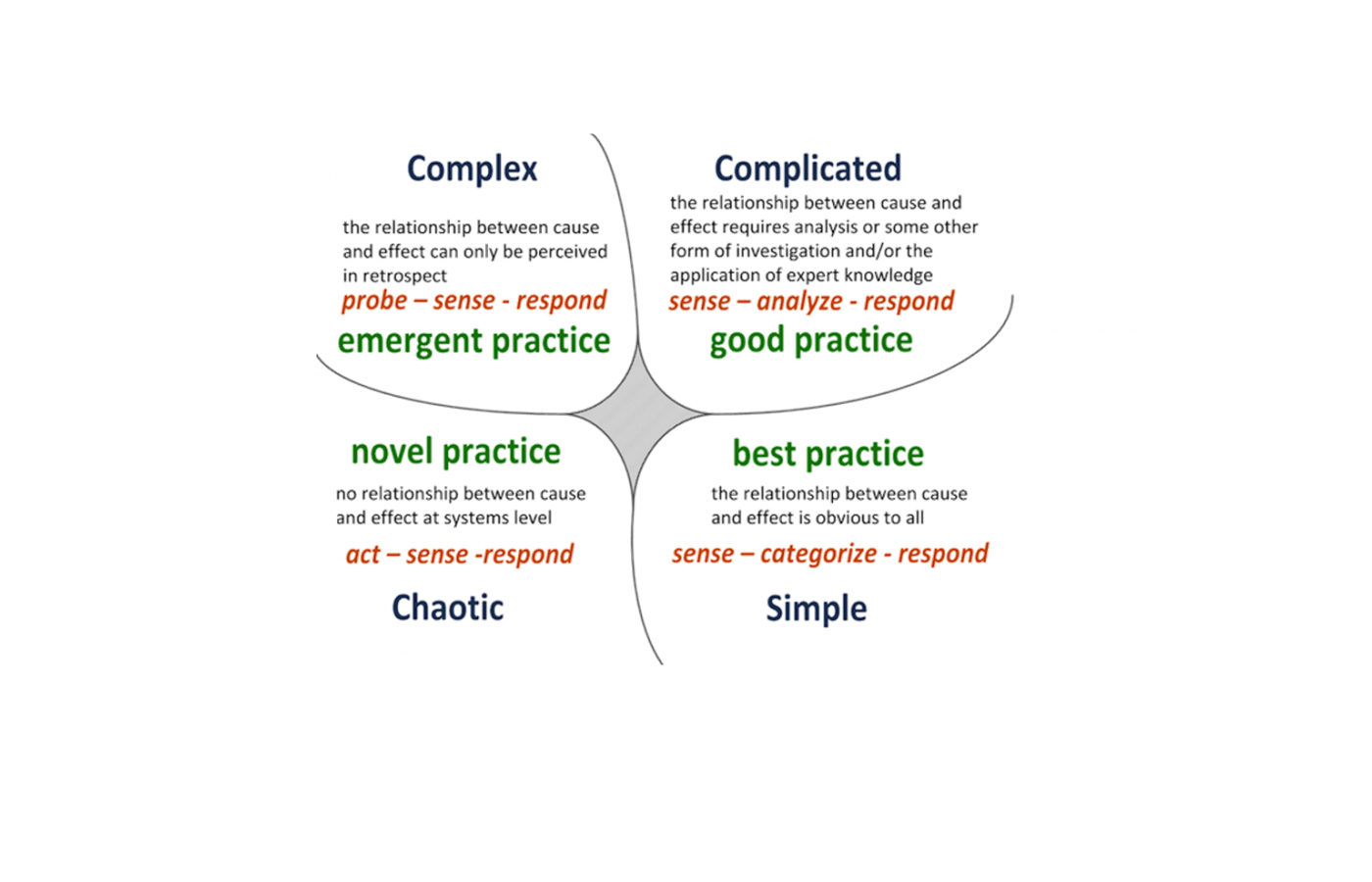
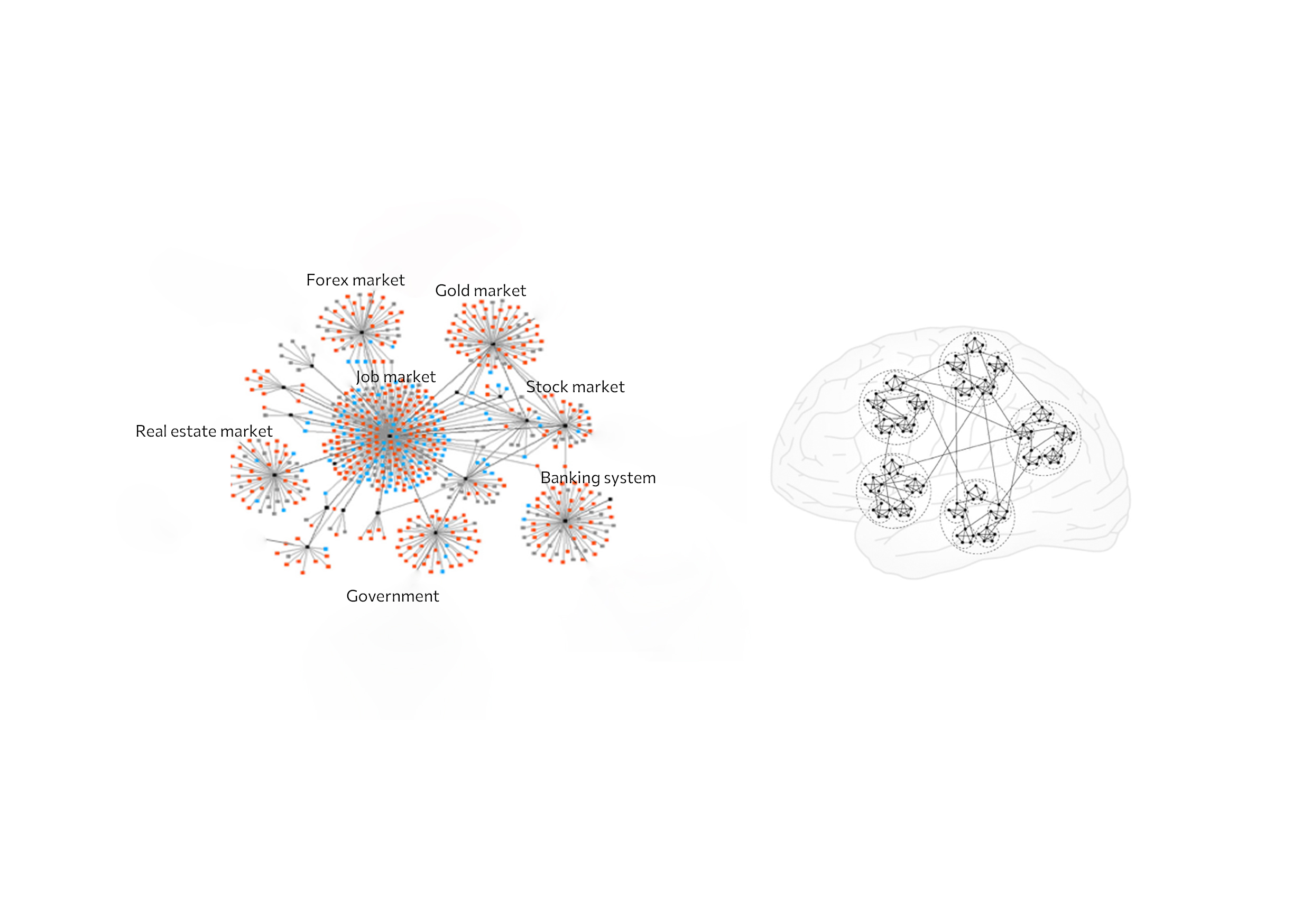
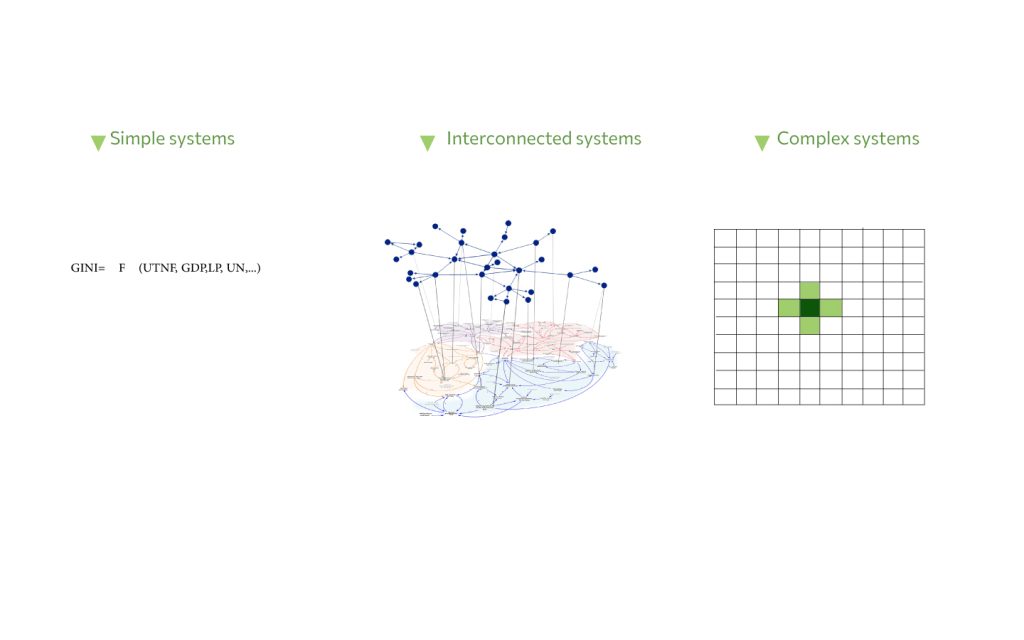
The Cynefin Framework (Kurtz & Snowden, 2003) classifies systems into five categories: simple, complicated, complex, chaotic, and disordered (central zone) (Figure 1). Most biological and social systems exhibit complex behavior at the micro level and complicated characteristics at the macro level. For instance, the human brain comprises interconnected neurons at the micro level but demonstrates modular interactions at the macro level (Figure 2a). Similarly, an economic system consists of micro-level agents (individuals/firms) engaging in simple transactions, while macro-level entities (financial markets, large corporations) exhibit nonlinear, emergent behaviors (Figure 2b).
Figure 1. Types of systems in the frameworkFigure 2. Relationship between complex and intertwined systems
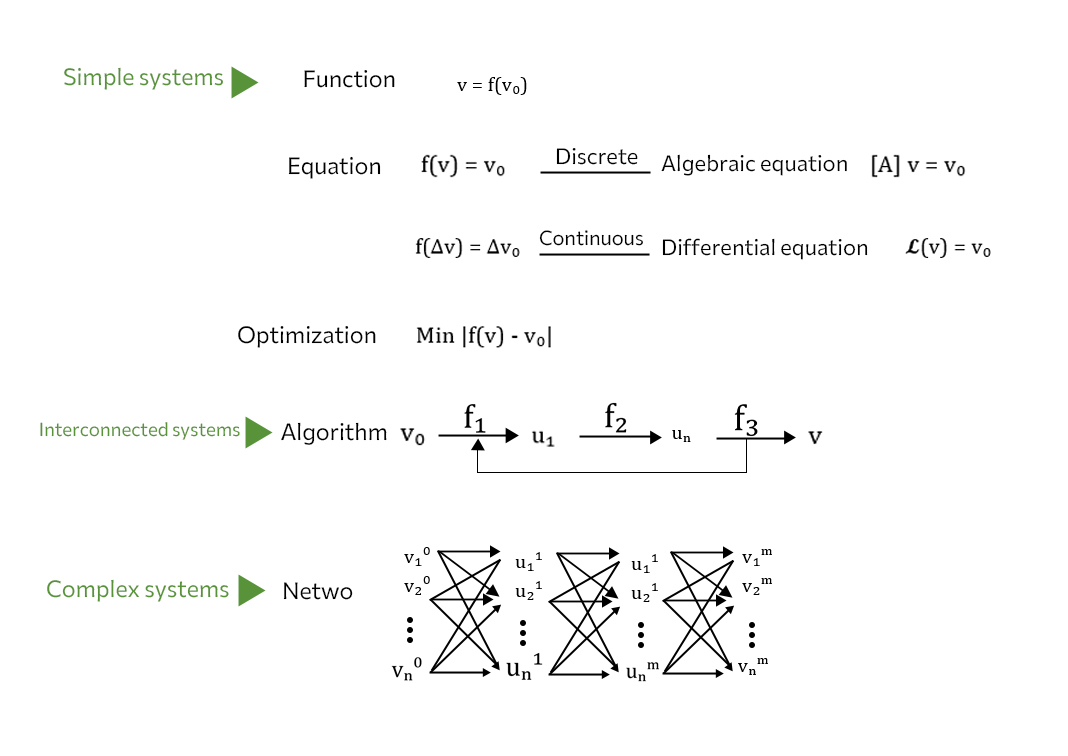
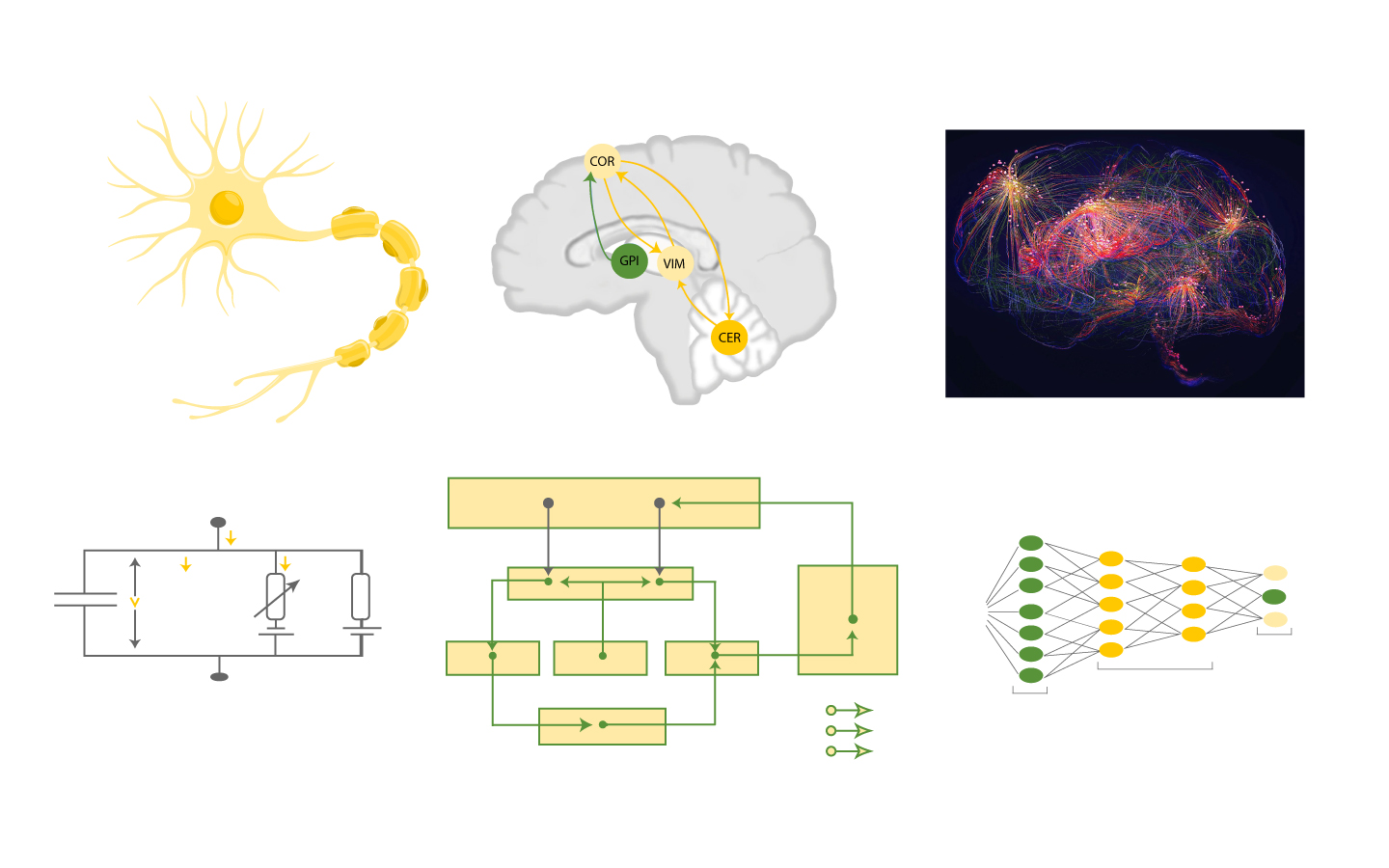
Modeling Approaches Mathematical tools vary by system type (Figure 3). Differential equations may model individual neurons (Figure 4), but simulating the brain’s emergent behavior requires algorithmic approaches or bottom-up methods like artificial neural networks. Likewise, macroeconomic modeling often employs algorithmic tools (e.g., causal networks, flow networks), though oversimplified representations may use fitted functions (Figure 5).
Figure 3. Types of mathematical tools available for modeling different systemsFigure 4. Suitable mathematical tools for modeling the brain at different levelsFigure 5. Suitable mathematical tools for economic modeling at different levels
2.2. Prior Studies on Infaq and Income Inequality
Existing research on Infaq’s poverty-reduction effects primarily relies on statistical data and fitted functions. For example, studies (e.g., Sobhani & Mehrabani, 2008; Badpa, 2019; Shokrani & Seyednaderi, 2017; Alizadeh et al., 2017; Ghaffarifard & Mirzaei, 2020) model income inequality in Iran
using:
where:
GINI: Gini coefficient
UN: Unemployment rate
LP: Labor productivity
GDP: Per capita GDP
UINF: Infaq index
GDPP: Squared per capita GDP
Linearized via logarithms
However, such unidirectional models ignore feedback loops between income distribution and economic variables. For instance, Ezzati & Nourmohammadlu (2012) found Infaq positively correlates with regional income and government spending but negatively with religious institutions, inflation, and unemployment. Sadeghi et al. (2013) modeled Infaq as an exponential function of regional income and religious capital. Ghaffarifard & Mirzaei (2020) improved upon this by constructing a causal feedback network (Figure 5), yet even this approach inadequately captures emergent behaviors. Agent-based modeling (Section 3.2) offers a more realistic alternative.
Empirical Findings on Infaq
While all studies acknowledge Infaq’s inequality-reducing effects, their conclusions diverge:
Strong Effects
Hassan Shahi (2019): Zakat distribution significantly reduces income gaps and boosts welfare.
Asgari & Niyazkhani (2013): Khums (Islamic tax) could eradicate poverty in Islamic states.
ABM simulates complex systems by modeling autonomous agents with localized interactions, generating emergent macro-level patterns. Economic phenomena (e.g., bubbles, crises) emerge from such micro-level interactions.
Infaq is mathematically formalized within the ABM framework based on its Quranic definition (Section 4.1). Simulations then quantify its macroeconomic impact.
4. Results, and Discussion
4-1. Modeling
Figure 2-b shows a schematic representation of the complex economic system. In this research, we simulate a highly simplified labor market as a complex system. The assumptions employed in this simulation are as follows:
Regular Network Structure: The market is assumed to have a regular structure. Therefore, as a simplification, the market can be considered as a matrix arrangement of trading agents. Accordingly, each agent can only conduct financial transactions with its four immediate neighbors. This differs from some conventional agent-based simulation methods that assume random transactions between agents or more realistic small-world and scale-free network structures. Although the assumption of a regular financial transaction network does not match the complex reality of financial exchange networks, it provides a suitable and acceptable initial approximation by limiting each agent’s transactions to a familiar circle, making it more plausible than the assumption of random agent interactions.
Static Network: The network is considered static, meaning that during modeling, the neighborhood relationships (i.e., transaction links and trading partners) do not change. Additionally, no agent or node is removed or added.
Transaction Strategies: In each simulation run and financial flow execution, each agent can choose one of the following three strategies to conduct financial transactions with one of its neighboring agents:
Free Strategy: The agent randomly selects one of its four neighbors and conducts a transaction with them.
Infaq Strategy: Borrowing from Ayatollah Khamenei’s definition in the book Outline of Islamic Thought in the Quran, Infaq is defined as “filling gaps and needs.” This definition is based on a precise etymological analysis of the root “nafaqa.” According to Mohammad Ali-Nejad et al. (2021), the semantic range of the root “nafaqa” was broad before Islam, but due to the formation of scientific or poetic language before the Quran’s revelation, it came to commonly mean “gap” or “hole.” Thus, the terms Infaq and Nafaqah were semantically constructed based on the prototype theory in Quranic language, and considering the concept of poverty in Quranic culture and the word khasaasah (meaning pit or gap), Infaq and Nafaqah came to mean filling the gaps of poverty and need. Accordingly, in this study, the Infaq strategy is defined as selecting the neighbor with the least liquidity among the four and conducting a monetary transaction with them. This financial flow from the agent to the least wealthy individual can be either service-based or purely charitable. Based on the fundamental Islamic principle of free will, it is assumed that agents adopt this strategy voluntarily and randomly. Note that other Islamic financial redistribution methods such as Khums (income tax) and Zakat (wealth tax), as well as the distribution of Anfal, etc., are not included in this modeling.
Self-Interest Strategy: The agent selects the neighbor with the highest available liquidity among the four and conducts a monetary transaction with them. It is assumed that the agent chooses this strategy whenever they decide (randomly) or, upon observing wealth accumulation by a neighbor, switches to always transacting with the wealthiest agent.
Closed Market: The market is assumed to be closed, and the economy’s total resources (market resources) are considered constant. In other words, the market is assumed to have no economic growth, and no resources are injected from outside. Note that although resources are assumed to be constant, the total money supply in the market is entirely variable and increasing depending on inflation.
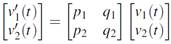
In this modeling, money flow is represented as a symbol of the value of assets available to individuals. It is assumed that individuals, based on market laws such as supply and demand and according to their utility functions, engage in the exchange of goods and services. Naturally, after such transactions, the intrinsic value of assets available to individuals changes. This change in the value of agents’ assets post-transaction is defined by the following general financial exchange law:
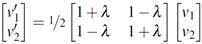
where v1 and v2 are the monetary values of the two transacting agents’ financial resources before the transaction, and v1′ and v2′ are the corresponding values after the transaction. Various forms of transaction matrices have been proposed. For example, Chakrabarti and Chakrabarti (2000) used the following transaction law:
where λ is an index of agents’ propensity to retain wealth. This exchange law is conservative because:
In this paper, the following exchange law is used:
where λ1 and λ2 represent the proportion of the initial capital of the transacting parties that is exchanged. For simplicity, it is assumed that in a single transaction, only one of λ1 or λ2 is non-zero. Note that this transaction law is also conservative.
Inflation Modeling: The following method is used to model inflation: In an inflationary economy, the base monetary value decreases. This means that the monetary value of capital available to individuals increases over time due to inflation. Accordingly, in this study, for simplicity in modeling inflation, it is assumed that at time t, the economic agent converts the money they have into capital. Thus, for the next time step t+Δt, considering the effect of inflation, the new monetary value of this capital is considered as the agent’s available liquidity. Therefore, in an inflationary economy, v(t+Δt)>v(t). However, it should be noted that, given the assumption of market conservation, the real value (e.g., gold-equivalent) of the individual’s assets remains the same at both times: m(t+Δt)=m(t).
4.2. Simulation Scenarios
Seven scenarios were simulated with identical initial income distributions (Boltzmann-type):
Free Market: Random transactions with random amounts.
Pure Infaq Economy: Always select poorest neighbors.
Hybrid Random/Infaq: Randomly alternate between Strategies 1 & 2.
Threshold-Based Infaq: Infaq only if agent’s liquidity exceeds a threshold.
Inflationary Free Market: Scenario 1 with inflation.
Inflationary Pure Infaq: Scenario 2 with inflation.
Inflationary Hybrid: Scenario 3 with inflation.
Key Results (Figures 6-13):
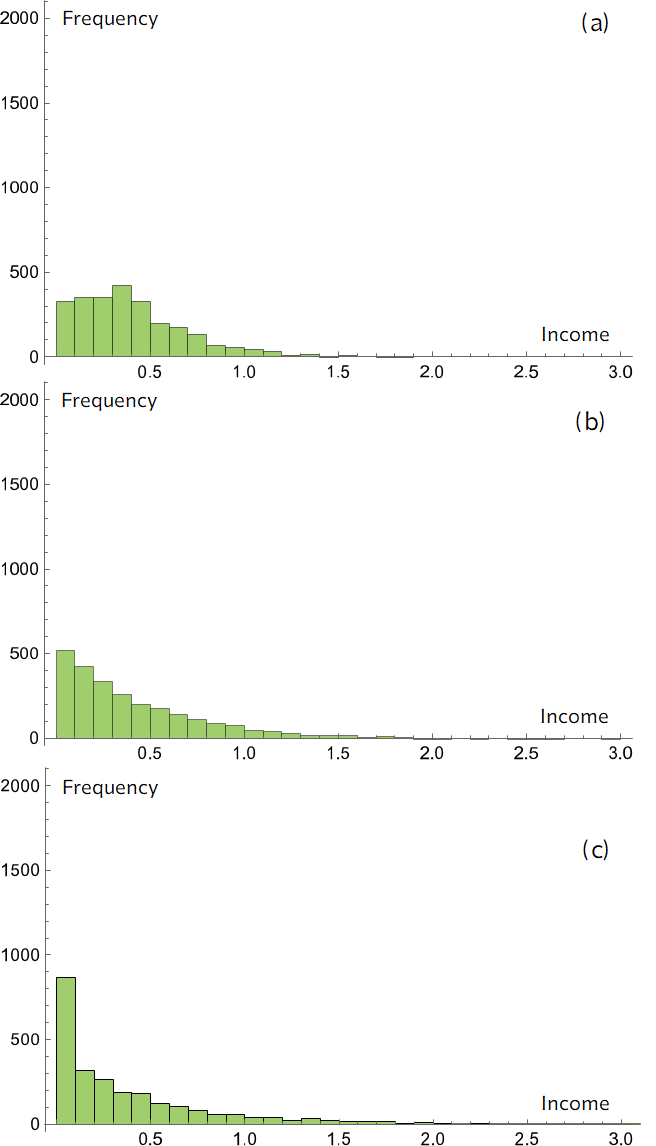
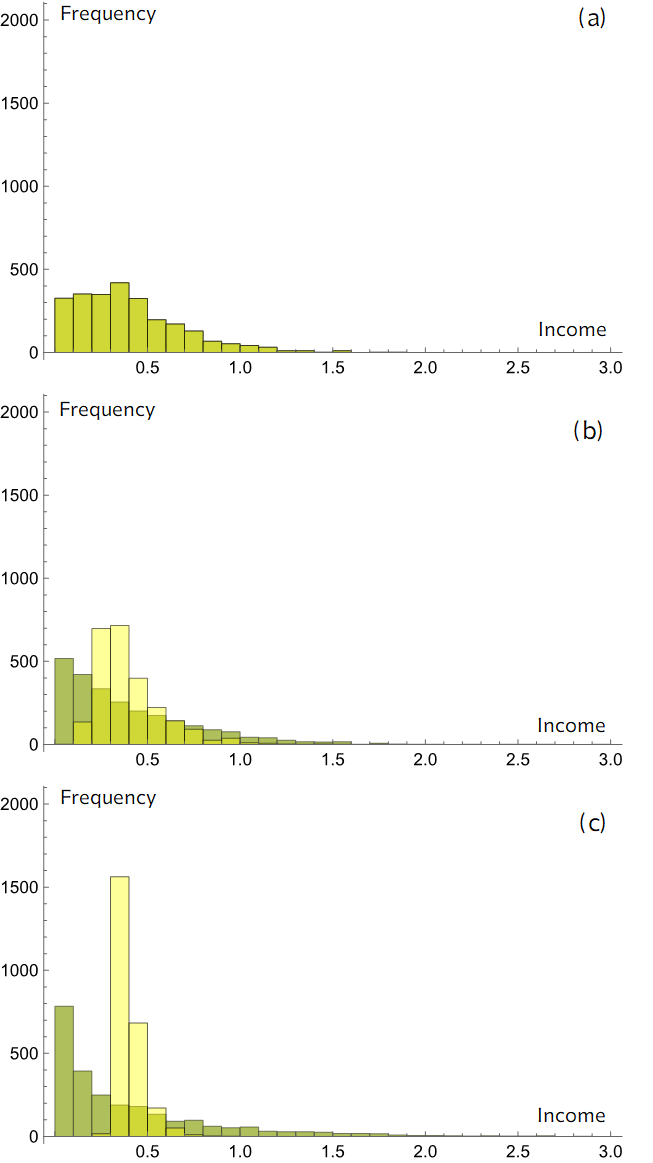
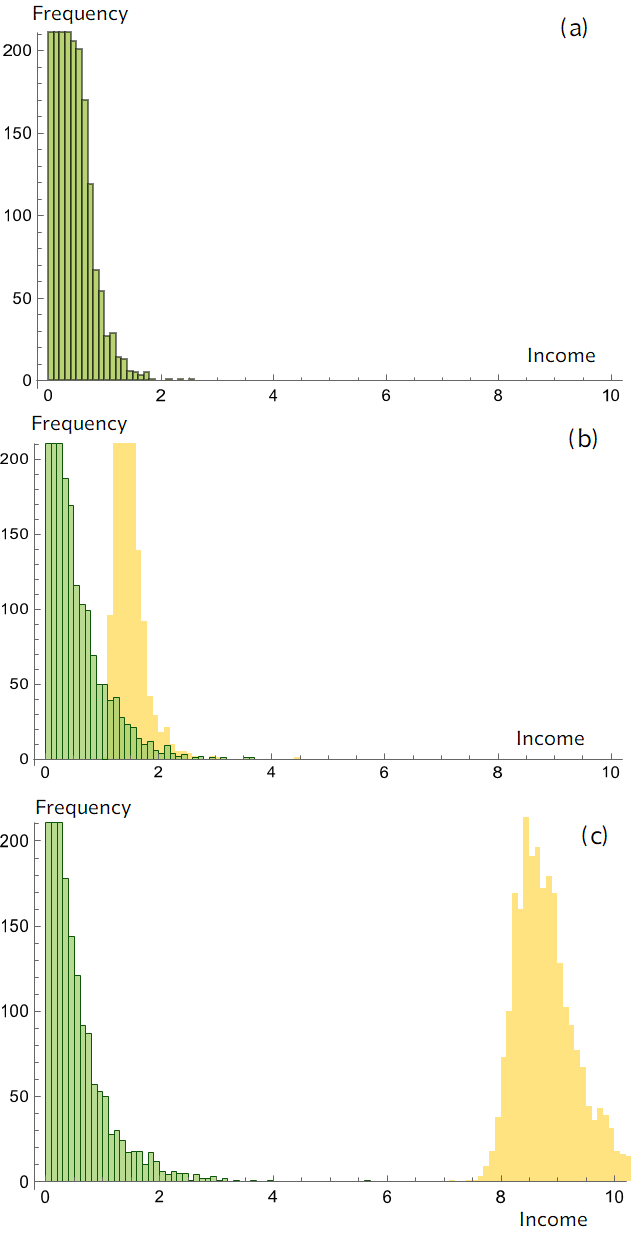
Free Markets (Figure 6): Converge to exponential income distributions (Boltzmann statistics), exacerbating poverty.
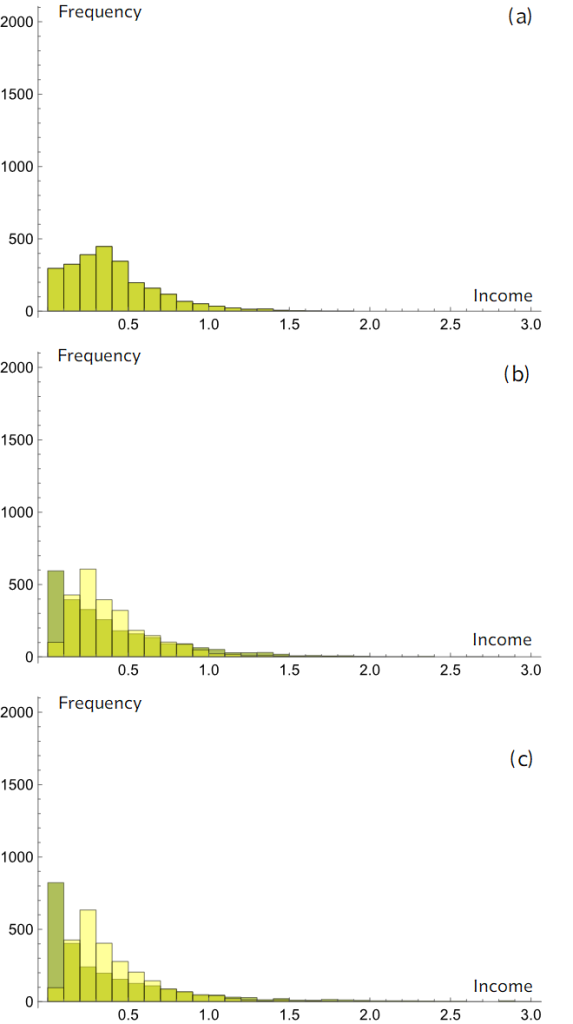
Pure Infaq (Figure 7): Eliminates extreme poverty/wealth, creating homogeneous middle-class (likely unrealistic per Islamic ideals).
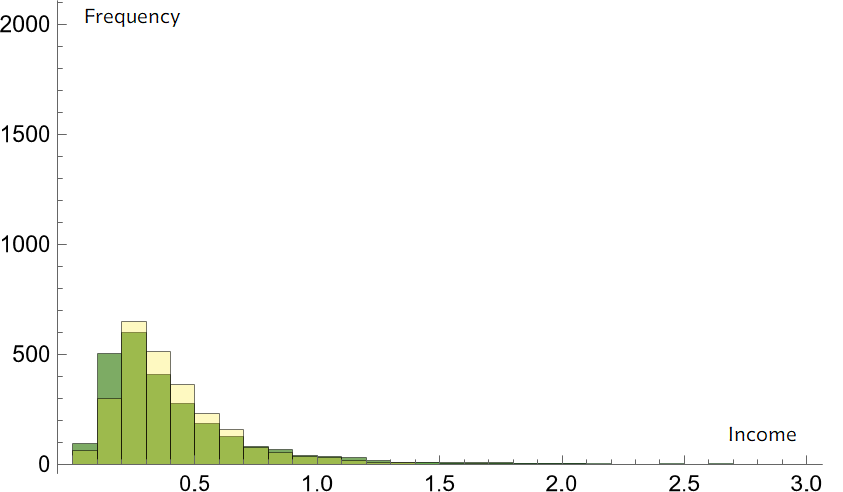
Hybrid Models (Figures 8-9): Reduce poverty significantly without complete equality (e.g., 50% Infaq adoption cuts lowest decile by ~70%).
Inflation Effects:
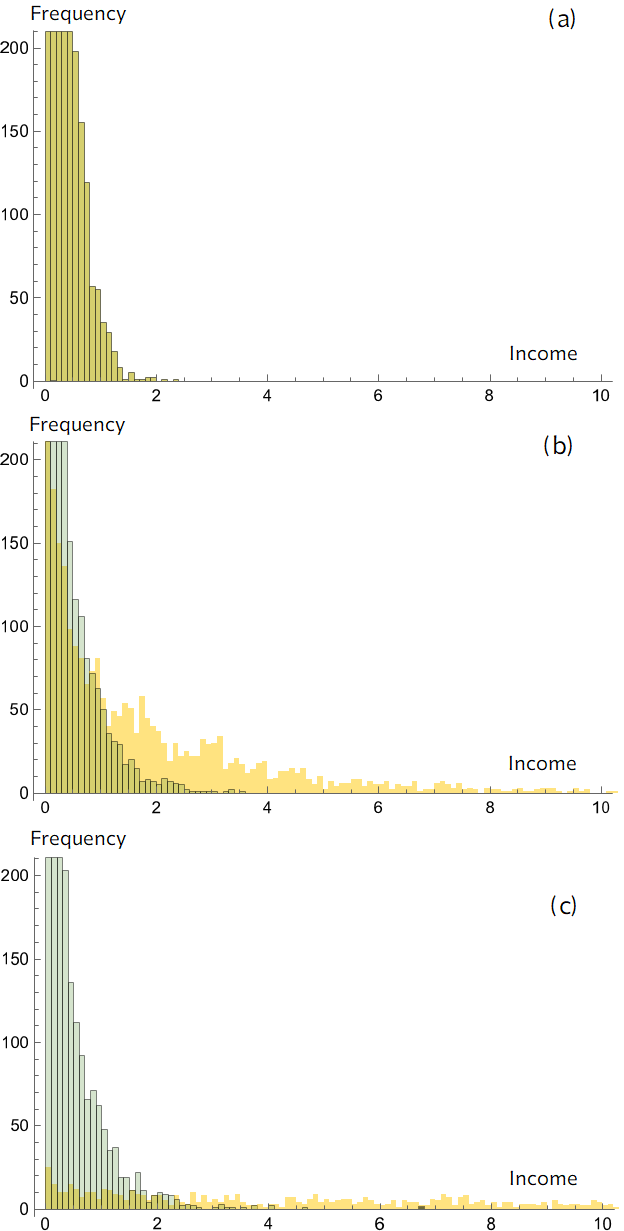
Free Markets (Figure 10): Catastrophic income dispersion (+300% Gini coefficient).
Pure Infaq (Figure 11): Maintains equitable distribution despite inflation.
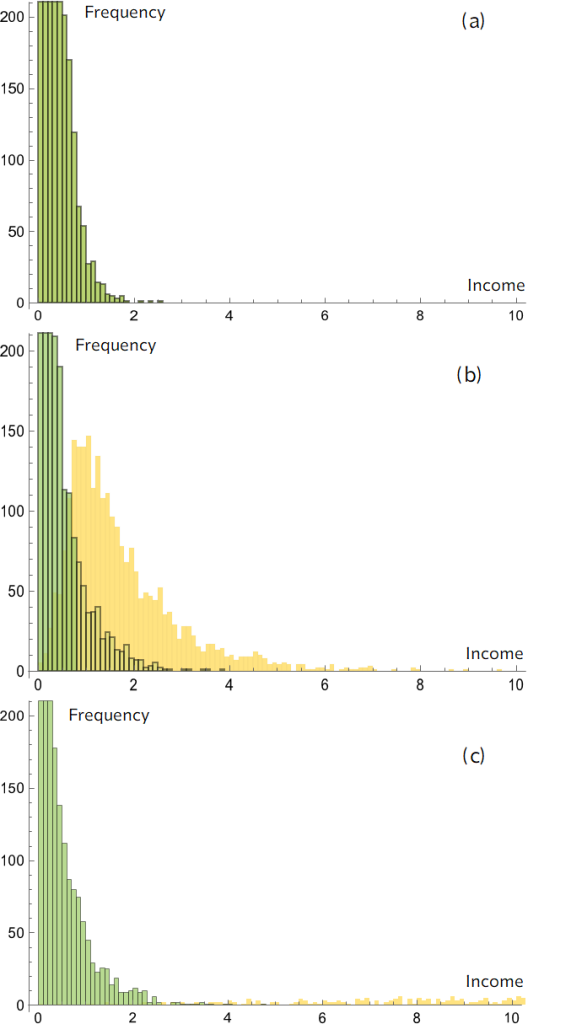
Hybrid (Figure 12): Mitigates but doesn’t eliminate inequality (middle-class income gap persists).
Infaq systems: Enables upward mobility (Quran 59:7 cited on preventing wealth circulation among elites).
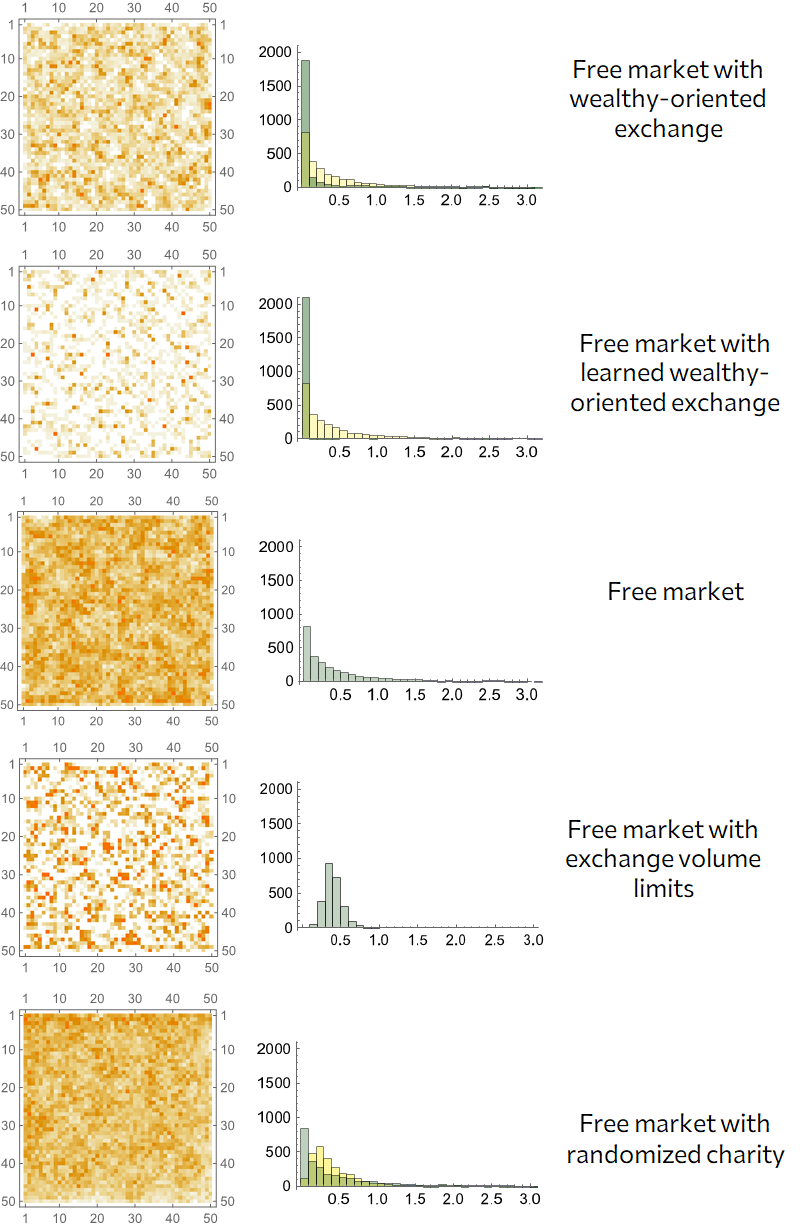
Figure 6. Income distribution changes under free market exchange assumptions: (a) initial, (b) after one exchange, and (c) after reaching equilibriumFigure 7. Comparison of income distribution changes under free market (green) and charitable economy (yellow) assumptions: (a) initial, (b) after one exchange, and (c) after reaching equilibrium
Figure 8. Comparison of income distribution changes under free market (green) and randomized free-full charity economy (yellow) assumptions: (a) initial, (b) after one exchange, and (c) after reaching equilibriumFigure 9. Comparison of equilibrium income distribution charts for randomized free-full charity economy (green) and limited-charity free economy (yellow)Figure 10. Comparison of income distribution changes under free market (green) and inflationary free market (yellow) assumptions: (a) initial, (b) after several exchanges, and (c) after reaching equilibriumFigure 11. Comparison of income distribution changes under inflationary free market (green) and full charity economy with inflation (yellow) assumptions: (a) initial, (b) after several exchanges, and (c) after reaching equilibriumFigure 12. Comparison of income distribution changes under inflationary free market (green) and randomized free-full charity economy with inflation (yellow) assumptions: (a) initial, (b) after several exchanges, and (c) after reaching equilibriumFigure 13. Poverty escape and income rigidity matrices for selected microeconomic policies
4.3. Comparative Analysis
Contrary to statistical studies (e.g., Sobhani & Mehrabani, 2008; Jal, 1994), Infaq demonstrates robust poverty reduction in simulations. The divergence suggests empirical studies may conflate Infaq with other variables. Notably, Infaq uniquely prevents income stagnation—a feature absent in other policies (e.g., European transaction limits). However, it cannot fully counteract inflation-driven middle-class income gaps.
Infaq, as an Islamic economic policy, not only significantly reduces poverty but also sustains economic mobility within society by preventing income stagnation. However, in inflationary economies, its impact on reducing the income gap of the middle class remains limited
5. Conclusion and Future Research Directions
This study has examined the nature and extent of Infaq’s impact on societal income distribution. Numerous domestic and international studies have been conducted in this field in recent decades, though the majority have been statistical in nature. One key challenge of such statistical research is the difficulty – at times impossibility – of isolating the relationship between two statistical variables from the influence of other inevitable factors. This challenge has contributed to some uncertainty regarding the results derived from such studies. Moreover, modeling complex systems like societal economies using simplified models such as fitted functions, even when nonlinear, warrants careful consideration.
In contrast, simulation methods provide the analyst with complete control over variables. With an appropriate model at hand, researchers can precisely examine the impact of one factor on another, free from the interference of unwanted variables. In this study, we employed a simple yet reasonable agent-based simulation model to investigate Infaq’s effect on income distribution. Various scenarios of financial, charitable, and hybrid transactions were designed and modeled within both inflationary and non-inflationary economic frameworks.
The key findings from these simulations lead us to conclude that Infaq has a remarkably significant impact on poverty reduction, eliminating the lowest income deciles, decreasing the number of impoverished households in society, and shifting them toward middle-income brackets. This finding, it should be noted, contradicts claims by researchers who, based on statistical studies, have estimated Infaq’s poverty-reducing effects to be minor and short-term. This discrepancy in findings must be examined in future research.
However, in an inflationary economy, Infaq cannot substantially influence the phenomenon of income dispersion within the middle class. Yet this Islamic policy not only controls poverty but also prevents income stagnation, ensuring society does not become economically “concretized.”
In conclusion, this study could be expanded in the following directions:
Incorporating more complex and realistic exchange network structures such as small-world and scale-free networks.
Implementing dynamic networks that allow for changing transaction partners, removing old nodes, or generating new ones. For removed nodes, asset redistribution rules based on inheritance laws could be implemented.
Integrating redistribution rules based on Islamic taxes such as Khums (income tax in the labor market) and Zakat (wealth tax in asset markets), as well as the distribution of Anfal and Fay’.
The study demonstrates that while Infaq proves highly effective in poverty alleviation and preventing economic rigidity, its limitations in addressing inflation-driven middle-class income dispersion point to the need for complementary policies in Islamic economic systems. Future research should particularly focus on reconciling the apparent contradiction between our simulation results and prior statistical findings regarding Infaq’s efficacy.
حسن شاهی، مرتضی، 1398، برآورد میزان تأثیر خمس و زکات بر منحنی لورنز و ضریب جینی، اقتصاد اسلامی، دوره ۱۹، شماره ۷۵.
رالز، جان، 1387، نظریه عدالت، ترجمه سید محمدکمال سروریان و مرتضی بحرانی، پژوهشکده مطالعات فرهنگی و اجتماعی، تهران
سبحانی، حسن، مهربانی، وحید، 1387، بررسی تأثیر انفاق بر نابرابری درآمدها در ایران، فصلنامه علمی پژوهشی اقتصاد اسلامی، سال هفتم. ش 37.
سیدنورانی، سید محمدرضا، خاندوزی، سید احسان، 1395، معرفی و محاسبه شاخص ترکیبی عدالت اقتصادی از منظر اسلامی در ایران، فصلنامه مجلس و راهبرد، سال بیست و سوم، شماره 85، بهار 1395.
شکرانی، رضا، سیدنادری، طاهره سادات، 1396، اولویت سنجی انفاق در قرآن و حدیث، دو فصلنامه علمی پژوهشی مطالعات قرآن و حدیث، سال دهم، ش ۲.
صادقی، حسین، عزتی، مرتضی، شفیعی، علی، 1392، تخمین تابع انفاق در ایران، فصلنامه پژوهشهای اقتصادی (رشد و توسعه پایدار)، سال سیزدهم. ش ۲.
عزتی، مرتضی، نورمحمدلو، پروانه ، 1391، برآورد اثر متغیرهای اقتصاد کلان بر انفاق، فصلنامه پژوهشها و سیاستهای اقتصادی، سال بیستم، ش ۶۳.
عزتی، مرتضی، محمودیان، مهرداد، 1393، برآورد اثر انفاق بر کاهش فقر در ایران، فصلنامه علمی پژوهشی اقتصاد اسلامی، سال چهاردهم، ش ۵۳.
عسگری، محمدمهدی، نیازخانی، سحر، 1393، برآورد ظرفیت خمس در رفع فقر در ایران طی سالهای 80-89، فصلنامه اقتصاد بانکداری اسلامی، شماره 8، 101-122.
علیزاده، امیرخادم، عبدالهی آرانی، مصعب، غفورزاده، حسین، 1396، ارتباط انفاق و رشد اقتصادی در ایران، فصلنامه علمی پژوهشی اقتصاد اسلامی، سال هفدهم، ش ۶۵.
عیوضلو، حسین، 1389، مروری بر معیارهای عدالت اجتماعی و اقتصادی در تطبیق با چارچوب شریعت اسلام، دوفصلنامه علمی-تخصصی مطالعات اقتصاد اسلامی، سال دوم، شماره دوم-بهار و تابستان 1389.
غفاری فرد، محمد، میرزایی، هادی، 1399، تأثیر انفاق بر توزیع درآمد در استان هاي مختلف ایران، (رویکرد دادههاي تابلویی)، دو فصلنامه علمی مطالعات اقتصاد اسلامی، مقاله پژوهشی، سال سیزدهم، شماره اول (پیاپی 26 )، بهار و تابستان 1400، 337-370.
لاک، جان، 1387، رسالهای در باب حکومت، ترجمه عضدانلو، تهران، نشر نی.
محمدعلی نژاد عمران، روح الله، اویسی، کامران، دهقانی، فرزاد، 1400، کاربست معناشناسی در ترجمه ماده «ن ف ق» در قرآن کریم، مطالعات ترجمه قرآن و حدیث دوره 8 (15)، 30-62.
نصیرخانی، پرویز، عزتی، مرتضی، نظامپرست، رضوانه، 1397، تاثیر نهادهای اسلامی انفاق و قرضالحسنه بر کاهش فقر در ایران، نشریه اقتصاد و بانکداری اسلامي، دوره ۷ (۲۵)، ۲۲۱-۲۳۶.
نعمتی، محمد، 1392، تحلیل عدالت بین نسلی رالز و تبیین آن از منظر اقتصاد اسلامی، رساله دکتری دانشکده اقتصاد دانشگاه تهران.
نوزیک، رابرت، 1376، عدالت و استحقاق، ترجمه مصطفی ملکیان، نقد و نظر.
Bamoul W. J. (1982). Applied Fairness Theory and Rationality Policy, AER.
Bentham J. (1970). An Introduction to Principles of Morals and Legislation, London: Athlone Press.
Chakrabortiand A. and Chakrabarti B.K. (2000). Statistical mechanics of money: How saving propensity affects its distributions. Eur.Phys.J. B, 17:167–170.
Ghiasul Haq S. (2013). Distribution of I ncome and Qealth in Islam, Sputh East Asia journal of Contemporary Business, Vol, 2, (In Persian).
Jehle, G. A. (1994). Zakat and Inequality: Some Evidence from Pakistan, Review of Income and Wealth, Vol.40, Issue 2, (In Persian).
Kayek F. V. (1976). The Mirage of Social Justice, NewYork, Routledge.
Khan M. F. (1984). Macro consumption function in Islamic framework, Journal of Research in Islamic Economics, Vol. 1, No. 2, (In Persian).
Kurtz C. F., Snowden D. J. (2003). The new dynamics of strategy: Sense-making in a complex and complicated world, IBM Systems Journal, Vol. 42 (3), 462–483.
Posner R. (1981). The Economics of Justice, Coumbridge, Harvard University Press.
Silver M. (1989). Foundations of Economic Justice. Basil lackwell.
Varian H. R. (1974). Equality, Envy and Efficiency, Journal of Economic Theory, 9.