A’udhu billahi min ash-shaytan ir-rajim
Bismillah ir-Rahman ir-Rahim
As-salamu alaykum wa rahmatullahi wa barakatuh
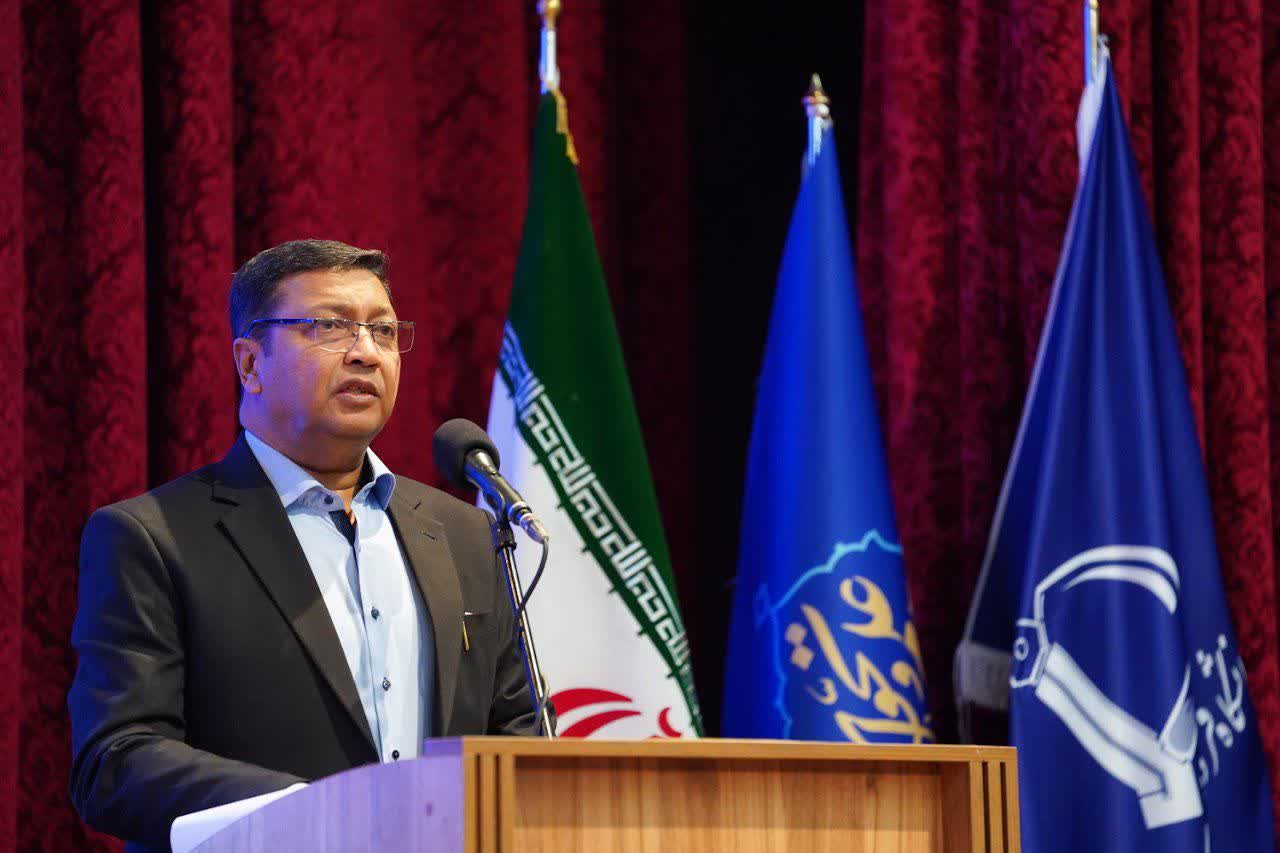
What a blessed occasion to come to Mashhad Sharif, one of the holiest places in the Muslim world. We arrived yesterday after a long journey and went straight to the Haram to pay our respects and offer salutations to the Imam. I am extremely grateful to all of you for inviting us to this sacred place. This is indeed a great honor and something we always look forward to.
My dear brothers and sisters, this is my first visit after the martyrdom of the great scholar and leader, Dr. Raisi. On behalf of the OIC and the people of the Islamic Republic of Pakistan, I would like to convey our condolences for this tragic loss. His passing marked the beginning of a cascade of events with far-reaching consequences that are still unfolding. While we do not yet know the full impact, his loss is deeply felt across the Muslim world and will take time to fully comprehend. This was the loss of the century, and we will always remember this great leader with profound respect and appreciation for his scholarship.
Excellency, my dear sister Professor Dr. Jamila Alam-ol-Huda, the driving force behind these initiatives that have led to the establishment of many centers—not only in Iran but also in Pakistan during her visit with President Raisi—where she proposed creating institutions that provide our youth with a different type of education, one connected to the divine teachings of the Holy Quran.
To the deans, faculty members, distinguished guests, and foreign delegates—including the young people from my own country—let me say this: On behalf of COMSTECH, the OIC’s premier institution representing 57 ministers of science and technology across four continents, I express our profound gratitude for this initiative, which we consider immensely significant. Insha’Allah, this will have a tremendous positive impact on the Muslim Ummah. The establishment of this institution in Mashhad Sharif is the most appropriate place for such a pioneering center. This is where universal science and Quranic education should begin. This is not just an institution for Mashhad or Iran—it is for the entire world, both Muslim and non-Muslim.
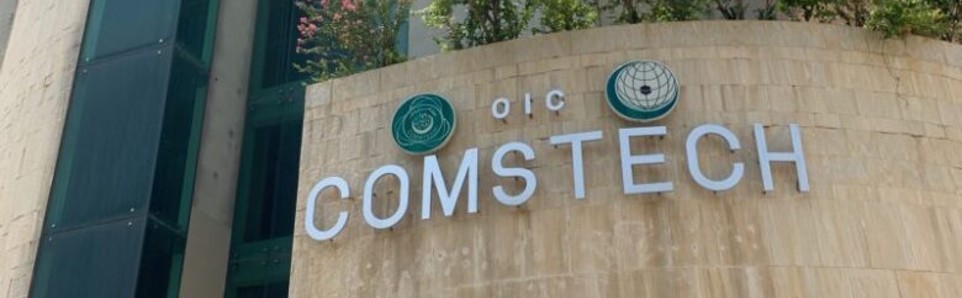
COMSTECH gratefully acknowledges the active role of the government and institutions of the Islamic Republic of Iran. Iran has always been at the forefront of supporting Muslims, especially the youth, across the Muslim world. Through Iran’s vision and support, we have implemented numerous science and technology programs.
Ladies and gentlemen, this conference highlights the connection between the divine words of Allah (SWT) in the Holy Quran and scientific knowledge. This theme is crucial in these turbulent times when scientific and technological tools are being used to create global hegemony, a new colonial order, exploitation, and even genocide. As a student of science and Coordinator General of COMSTECH, I speak with great satisfaction about our core mandate: to strengthen cooperation among OIC countries in science and technology. For this purpose, I have requested my dear brother, Professor Dr. Ali Akbar Salehi, to lead the effort in providing strategic direction, so COMSTECH can elevate the Ummah to new heights, insha’Allah.
The central role of COMSTECH is to nurture an Islamic scientific culture in S&T for sustainable and inclusive socioeconomic development. How can we achieve such development without following the divine teachings of our religion and the Holy Quran?
The conference topic is deeply personal to me. The Holy Quran, revealed to Prophet Muhammad (PBUH), embodies timeless wisdom. As the Quran asks: “Do they not ponder over the Quran?” (Surah Muhammad, 47:24), encouraging reflection on divine guidance.
Through this august gathering of scholars, thinkers, and scientists, we will explore the profound connection between Quranic verses and modern scientific inquiry. As Imam Ali (AS) said in Nahjul Balagha: “Knowledge is the treasure of the believers.” Let us delve into the intersection of divine teachings and scientific advancement, unlocking new horizons for academic exploration.
We must remember that the Quran, Sunnah, and Ahlul Bayt are the three foundational pillars of the Muslim world. They are our sources of guidance, and without them, we are lost. The Quran encourages inquiry and reflection: “Do they not ponder over the Quran, or are their hearts sealed?” (47:24). Our Prophet (PBUH) emphasized observation and experimentation—knowledge is obtained through both.
Quranic principles guiding scientific inquiry include:
- Tawhid (Unity): Recognizing the oneness of creation.
- Tafakkur (Reflection): Encouraging critical thinking—the foundation of science and philosophy.
- Tajriba (Experimentation): Emphasizing empirical evidence, the essence of empirical science.
We must motivate engagement with cutting-edge technologies while linking them to Quranic verses to achieve the scientific goals mentioned throughout the Quran. Knowledge in Islam is ‘ilm nafi’ (beneficial knowledge), sought from cradle to grave. Islamic teachings influence not only knowledge but also the morality that ensures knowledge benefits humanity.
As scientists, we face challenges: balancing faith and reason, addressing scientific skepticism, and overcoming cultural barriers. But we also have opportunities: enriching academic discourse, fostering global understanding, and inspiring innovative solutions. We must take everyone with us. The world must recognize that the primary function of knowledge in Islam is problem-solving. Any knowledge that does not solve humanity’s problems is counterproductive. Knowledge used for unworthy purposes is like the venom of a serpent.
It is no coincidence that the science Muslims developed from the 8th to 12th centuries was rooted in Islamic humanistic values. Their contributions aimed at global welfare for humans and all life forms. As the Prophet (PBUH) prayed: “O Allah, I ask You for beneficial knowledge.”
In conclusion, the Holy Quran offers timeless wisdom guiding modern science. As Imam Ali (AS) said: “The Quran is the key to all sciences.” On behalf of COMSTECH, I propose the following:
- Launching the Quranic Foundation for Scientific Advancement (QFSA) with a secretariat in Iran.
- An OIC-level Islamic Science and Technology Initiative, including Quran-based STEM education led by COMSTECH and Iran.
- Integrated Quranic Studies and Science Programs in universities, combining interdisciplinary research with Quranic principles.
- Research grants for projects linking Quranic teachings to scientific inquiry.
- Curriculum development incorporating Quranic verses into science courses—currently lacking in the Muslim world.
From COMSTECH’s platform, we propose a network of research institutions working on Quran and science, with its secretariat in Islamabad or Mashhad. We also invite you to host the next conference in Islamabad at the COMSTECH Secretariat.
Additionally, we are pleased to announce 15 annual travel grants for researchers from Muslim countries to visit this new Quran and Science Research Center in Mashhad.
I conclude by expressing deepest gratitude to our hosts and Iran’s visionary leadership, especially Ferdowsi University of Mashhad, for this transformative initiative. May Allah accept our efforts and guide us in merging divine teachings with scientific advancement to enlighten lives worldwide.
Wa as-salamu alaykum wa rahmatullahi wa barakatuh.