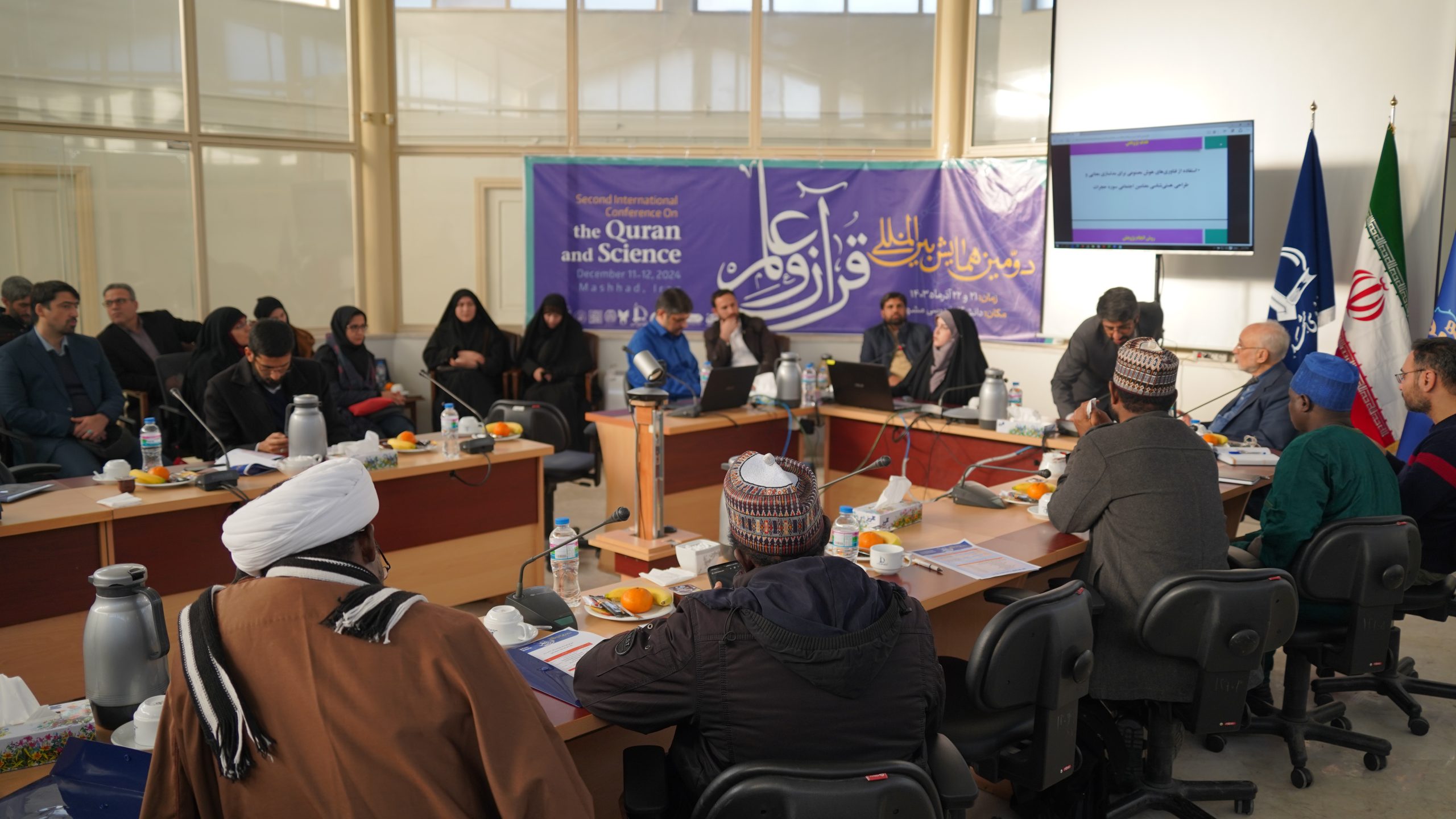
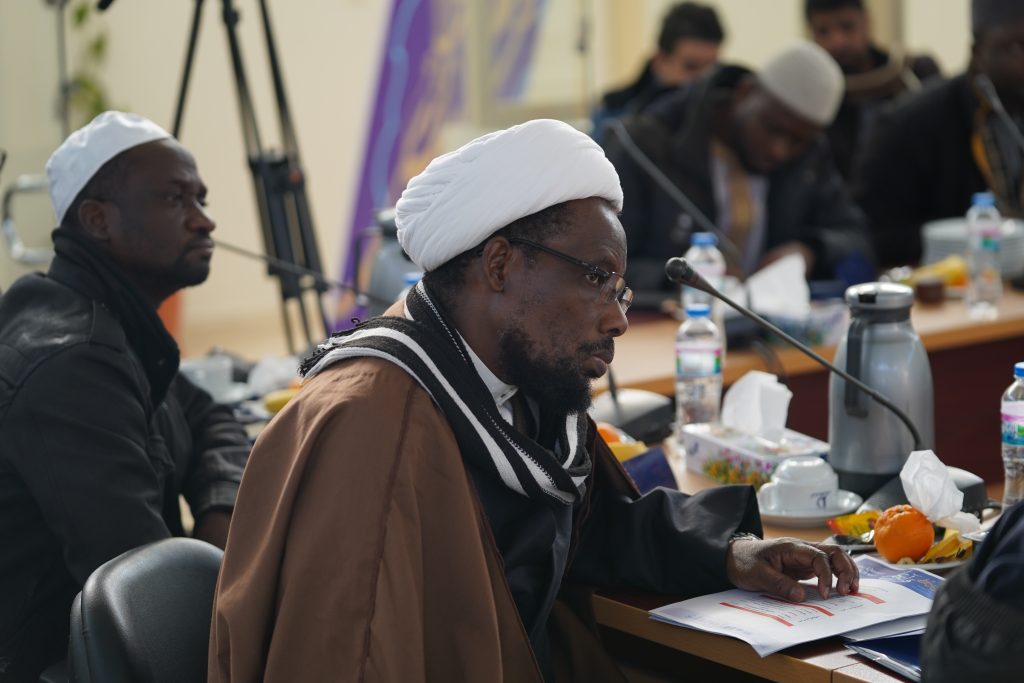
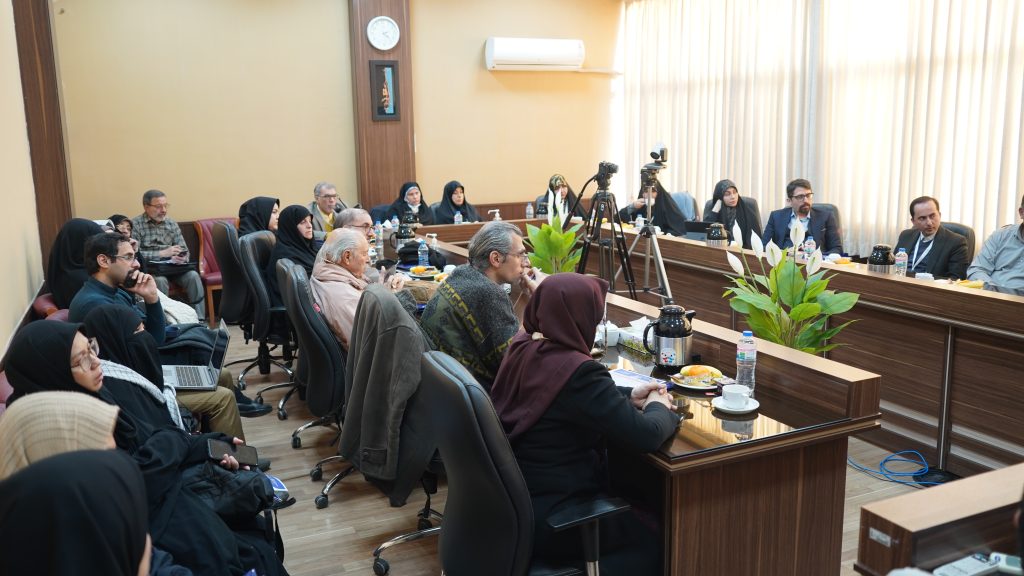
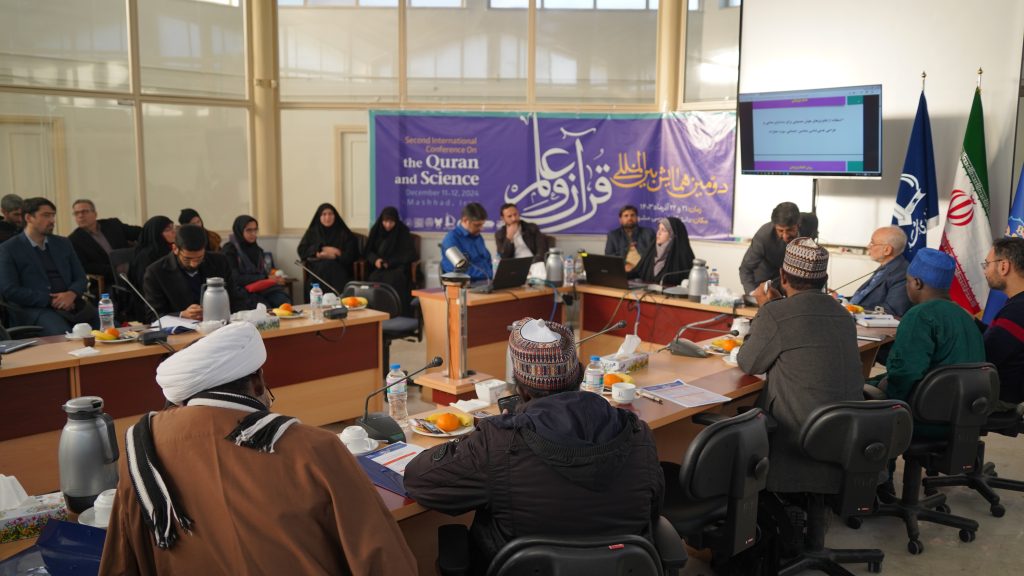
The collection of papers presented in the second section of the Second International Conference on Quran and Science, focusing on natural sciences – particularly medical and biological sciences – showcases innovative efforts to reconsider scientific concepts from the perspective of the Holy Quran. This collection includes over 20 papers from prominent researchers at domestic and international universities, each adopting an interdisciplinary approach to draw inspiration from Quranic verses in analyzing biological, behavioral, medical, and technological phenomena.
Participating institutions in this section included Ferdowsi University of Mashhad, University of Tehran, University of Isfahan, Tabriz University of Medical Sciences, Shahid Beheshti University, Payame Noor University, and Islamic Azad University of Tehran. Several English-language papers were also presented by international researchers (including from Oxford University) and other prestigious scientific centers.
The paper “Quranic Inspiration and Horizon-Expansion in Biological Paradigms” by Dr. Seyed Bagher Seyednezhad and Dr. Mohammad Rabani Khorasgani proposes a novel concept of life as “Sha’air Allah” (Divine Signs), inspired by the Quran, which could replace reductionist paradigms of modern biology and redefine science along meaningful and committed pathways.
Another paper by Dr. Hossein Zamani from the Mashhad Food Science and Technology Research Institute develops a “Tayyib” certification system based on the Quranic concept of pure life (Hayat Tayyibah), demonstrating how Quranic values like halal, health, blessing, authenticity and attractiveness can create practical models for ethical production/consumption, Islamic branding and quality of life enhancement.
Fatemeh Hababi’s study “Scientific References in Quranic ‘Eat’ Verses” beautifully illustrates the connection between nutrition, health and divine knowledge, developing a descriptive-analytical model for biological health inspired by Quranic dietary guidelines.
Notable studies include Hossein Yousefi’s paper “Reflections on Evolution in Quran and Biology,” which examines potential compatibility between Quranic creation verses and evolutionary theory, and Naser Ansari-Pour’s “Misconceptions about Evolution” from Oxford University, which critically analyzes perceived conflicts between Darwinian theory and religious texts, proposing a conceptual model for integrating Quranic narratives with biological evolution principles.
In medicine, Tabriz University of Medical Sciences presented “Systematic Study of Quran Recitation Effects on Premature Infants,” compiling experimental evidence showing Quran recitation significantly reduces heart rate, improves oxygen saturation, and decreases pain/anxiety in NICU infants – a successful example of Quranic applications in non-invasive medical interventions.
Dr. Fereshteh Dadfar’s comparative study “Ginger in Quran, Traditional Medicine and Modern Science” highlights ginger’s active compounds (gingerols and shogaols) with high antioxidant activity and therapeutic potential for cardiac, digestive, neurological and inflammatory diseases – further evidence of Quran-inspired pharmaceutical potential.
The paper “Scientific Evidence of Honey’s Anti-Cancer Effects” by Tabriz University researchers reviews decades of lab/clinical studies confirming honey’s antimicrobial properties along with wound-healing, immune-boosting and tumor-inhibiting capabilities – scientific validation of the famous Quranic verse about honey containing “healing for mankind.”
In scientific theology, Dr. Rasoul Rasoulipour’s paper “Divine Action and Modern Science” introduces the Divine Action Project (DAP), demonstrating how even within modern science frameworks, divine providence can be discussed regarding natural and quantum laws.
Dr. Azam Malekouti’s anthropological study “Humanity’s Place in Science” offers a new religious anthropology integrating soul, emotion, reason and will as foundations of human life.
The paper “Challenges in Scientific Interpretation of Surah At-Tariq Verse 7” reconciles traditional exegesis with modern medical findings, building bridges between semantic meaning and human physiology through scientific-linguistic interpretation.
Papers like “Survival in Whale’s Body Inspired by Prophet Yunus’ Story” demonstrate how scientific-interpretive approaches can understand Quranic narratives within natural/biological possibilities without diminishing their spiritual depth.
A remarkable focus emerged on studying Quranic animals through innovative scientific analyses of their behavioral, cognitive and structural characteristics. The Quran frequently presents animals not as decorative elements but as “signs within selves” (ayat anfusiyya) whose proper understanding reveals deeper layers of existence.
The paper “Mechanisms of Sound Production/Reception in Ants” examines Surah An-Naml 18, revealing ants’ sophisticated auditory/communication structures far beyond previous assumptions, proposing specialized ant labs for biological/biomedical research.
“Honeybee: Cognition, Perception and Sensing” analyzes Surah An-Nahl verses about “revelation to bees,” identifying five cognitive domains including quantitative processing, emotional states, social learning, information memory and metacognition – showing Quranic “inspiration” refers to remarkable decision-making intelligence beyond mere instinct.
“The Crow as Human Teacher” inspired by Cain’s story in Surah Al-Ma’ida explores crows’ cognitive features in complex situations, suggesting applications in AI system design and cognitive modeling while building semantic bridges between theology, biology and ethics.
Another paper examines the metaphorical “spider’s house” in Surah Al-Ankabut not just for structural fragility but for spider silk’s extraordinary biomaterial properties as a high-strength, flexible, engineerable bio-metamaterial – a striking example of materials science aligning with Quranic semantic miracles.
Two particularly groundbreaking papers include:
“Effects of Intermittent Fasting on Cancer Treatment” showing controlled fasting can reduce oxidative stress and improve immune response against treatment-resistant cancers – connecting religious practice with innovative medical therapies.
“Halal/Haram Foods: Gut-Brain-Microbiota Axis” demonstrates how food types affect behavior, cognition and even personality through gut microbiome regulation and brain interactions – opening new scientific understanding of Quranic dietary laws where food shapes not just body but mind, memory, mood and spirituality.
These papers, alongside studies on biological evolution, behavioral genetics, scientific interpretations of creation verses, therapeutic properties of honey/ginger, and biological field effects of water, mark a new direction in Quran-inspired scientific research – not seeking simplistic proofs but creating theories, expanding horizons and raising questions at contemporary science’s frontiers.
The Quran and Science Research Center at Ferdowsi University played a pivotal role through its extensive specialized papers in behavioral biology, neuroscience, biophysics and Quranic zoology.