"The Holy Quran, as humanity's guiding book, has always inspired profound research across various fields. In this issue, we present an innovative study that employs advanced computational methods, including topic modeling and network analysis, to discover 'motor themes' in the Quran. These themes, located at the intersection of recurring and interconnected concepts, play a key role in shaping the Quran's narrative structure. The findings of this research not only enrich our understanding of the systematic relationships between Quranic themes but also represent a significant step at the intersection of religious studies and quantitative methods. We hope this interdisciplinary approach opens new horizons for Quranic scholars and text analysis specialists."
Abstract
This study employs a novel computational approach to analyze the thematic structure of the Quran, integrating topic modeling and network analysis to identify and explore core, interconnected themes. Recognizing the complexities of preprocessing Arabic text, we utilize the King Fahd Complex’s English translation of the Quran. Latent Dirichlet Allocation (LDA) is applied to extract 80 distinct topics, representing the diverse thematic landscape of the text. A co-occurrence network, constructed using VOSviewer and analyzed with Gephi, reveals the relationships between words based on their co-occurrence within verses. By mapping LDA-derived topics onto this network and calculating their centrality and density, we identify “motor themes” as those exhibiting both high centrality and high density, indicating their influence and interconnectedness. These motor themes are further ranked based on their distance, with greater distance signifying higher prominence within the narrative. Our analysis reveals nine prominent motor themes, ranging from social laws and family matters to divine attributes, revelation, and spiritual struggle. A qualitative analysis of these themes, reveals nuanced insights into their theological significance and interconnectedness. This innovative methodology provides a dynamic and interconnected understanding of the Quran’s thematic structure, offering a complementary perspective to traditional exegesis and previous computational analyses. This work opens new avenues for exploring religious texts computationally, contributing to a more comprehensive understanding of the Quran’s complex and enduring message.
Keywords: Quran, Network Analysis, Topic Modeling, Thematic analysis, Motor themes.
1. Introduction
The Quran, revealed to the Prophet Muhammad (peace be upon him) over a period of twenty-three years, stands as the immutable word of God and the cornerstone of Islam (Abdul-Raof, 2013). Revered by Muslims worldwide as a source of divine guidance, it illuminates the path towards spiritual enlightenment, ethical conduct, and social harmony (Esack, 1997). Its profound wisdom transcends the boundaries of time and culture, offering enduring principles for navigating the complexities of human existence (Nasr, 2003). From the intricacies of personal faith to the establishment of just societies, the Quran’s teachings permeate every facet of a Muslim’s life, shaping individual beliefs, actions, and interactions within the broader community (El Fadl, 2002). Its verses, imbued with divine eloquence and profound meaning, inspire reflection, contemplation, and a lifelong pursuit of knowledge and understanding (Leaman, 2006). This sacred text serves not merely as a collection of verses but as a living testament to God’s eternal wisdom and mercy, guiding humanity towards a path of righteousness and illuminating the way towards a meaningful and purposeful life.
Within the rich tapestry of Islamic scholarship, the tradition of Quranic exegesis (tafsir) holds a position of paramount importance. Generations of scholars have dedicated their lives to unraveling the complexities of the Quran, delving into its linguistic nuances, historical context, and spiritual depths. This scholarly endeavor, deeply rooted in reverence for the divine text, has produced a vast body of work that illuminates the Quran’s multifaceted layers of meaning (Rippin, 2001). In the Iranian scholarly tradition, this interpretive legacy shines particularly brightly, with figures like Allameh Tabataba’i standing as beacons of profound insight and erudition. His magnum opus, Al-Mizan fi Tafsir al-Quran (Tabataba’i, n.d.), represents a monumental achievement in Quranic exegesis, offering a comprehensive and nuanced interpretation that draws upon a wide range of disciplines, from philosophy and theology to history and linguistics. Tabataba’i’s work exemplifies the depth and rigor of traditional Quranic scholarship, emphasizing the importance of meticulous textual analysis, contextual understanding, and spiritual reflection. Other prominent Iranian scholars, such as Ayatollah Jawadi Amoli (Amoli, 2008) with his focus on philosophical and mystical dimensions, have also made significant contributions to understanding the Quran’s profound wisdom. These scholars, deeply steeped in the Islamic intellectual tradition, have enriched our understanding of the Quran through their profound qualitative analyses, demonstrating the enduring power of human intellect and spiritual insight to illuminate the divine message. Their work serves as an invaluable foundation for contemporary studies of the Quran, reminding us of the importance of grounding our inquiries in the rich legacy of traditional scholarship.
Traditional Quranic scholarship, exemplified by the meticulous exegesis of scholars like Allameh Tabataba’i, has provided invaluable insights into the Quran’s intricate layers of meaning. These qualitative interpretations, often deeply rooted in linguistic, historical, and theological analysis, remain essential for understanding the Quran’s multifaceted message (Losee, 2012). However, the advent of digital technologies and computational methods offers new possibilities for exploring the Quranic text in complementary ways. Quantitative approaches, utilizing techniques from text mining, natural language processing, and computational linguistics, can provide a different lens through which to examine the Quran’s structure, vocabulary, and thematic interconnections. These methods allow for large-scale analysis of the Quran’s textual features, identifying patterns and relationships that may not be readily apparent through traditional qualitative methods alone (Grimmer & Stewart, 2013). Quantitative analysis can reveal statistical distributions of words and phrases, uncover hidden thematic structures, and offer data-driven insights into the Quran’s composition and organization. Such approaches are not intended to replace or diminish the value of traditional scholarship but rather to complement and enrich it, providing new perspectives and potentially uncovering novel insights that can enhance our understanding of this divinely revealed text. By combining the strengths of both qualitative and quantitative approaches, we can strive for a more holistic and comprehensive appreciation of the Quran’s profound wisdom.
While traditional Quranic exegesis has predominantly relied on qualitative interpretations, a growing body of research explores the Quran through the lens of quantitative analysis. These studies leverage computational methods to uncover patterns, relationships, and statistical distributions within the text, offering new perspectives on its structure and content. For instance, Alhawarat, Hegazi, and Hilal (2015) investigated the statistical characteristics of the Quran’s vocabulary, including word frequencies, word clouds, and term distributions across different chapters. Their work provided a quantitative overview of the Quran’s lexical landscape. Similarly, Panju (2014) explored thematic structures within the Quran using probabilistic topic modeling and non-negative matrix factorization, aiming to identify and visualize latent topics. Other researchers have focused on specific aspects of the Quran. Bentrcia, Zidat, and Marir (2017) delved into semantic relationships between words, examining the strength of connections between conceptually linked terms. Marir, Tlemsani, and Majdalwieh (2019) employed a recursive co-occurrence text mining algorithm to extract verses related to specific Islamic banking business processes, demonstrating the potential of quantitative methods for applied research. Siddiqui, Faraz, and Sattar (2013) investigated the thematic structure of the Quran using probabilistic topic models, attempting to categorize chapters based on their topical content. While these and other related works represent valuable contributions, they often focus on individual terms, topics, or passages in isolation. This paper aims to extend these efforts by incorporating network analysis, providing a more integrated and holistic perspective on the Quran’s thematic interconnections.
Network analysis offers a powerful framework for representing and analyzing relationships between concepts, allowing us to move beyond isolated analyses to a more holistic understanding of the Quran’s thematic structure (Scott, 2017). By representing Quranic concepts as nodes and their relationships as edges, we can visualize and quantify the intricate web of themes and their relative importance within the overall narrative.
This paper addresses this gap by introducing a novel approach that integrates topic modeling with network analysis to identify and analyze what we term “motor themes” in the Quran. The concept of “motor themes” is novel in Quranic studies and represents a significant departure from traditional methods. These themes are not simply collections of related words but rather central, densely interconnected topics that drive and shape the broader narrative. By constructing a co-occurrence network of words and mapping the topics onto this network, we gain a unique perspective on the centrality and influence of different themes. This network-centric approach allows us to identify and rank motor themes based on their position and interconnectedness, revealing their relative importance and contribution to the Quran’s overall message. This innovative integration of topic modeling and network analysis offers a new lens for understanding the complex thematic tapestry of the Quran, going beyond existing research to provide a more interconnected and dynamic view of the text’s underlying message.
2. Methodology
Preprocessing Arabic text for thematic analysis presents significant challenges due to the complexities of the language’s morphology, syntax, and semantics. To mitigate these challenges and facilitate a robust thematic analysis, this study utilized the King Fahd Complex for the Printing of the Holy Quran’s English translation of the Quran. This translation provides a readily accessible and widely accepted English version of the text, allowing for efficient preprocessing and analysis.
This research followed a systematic process to analyze the thematic structure of the Quran using a combination of text mining and network analysis techniques. The following steps outline the methodology employed:
- Data Acquisition and Preprocessing: Recognizing the inherent complexities in preprocessing Arabic text for thematic analysis, we opted to use the King Fahd Complex for the Printing of the Holy Quran’s English translation. This readily available and widely accepted translation facilitated efficient preprocessing and subsequent analysis.
- Topic Modeling: We employed the Latent Dirichlet Allocation (LDA) algorithm to uncover the underlying thematic structure within the Quran. Each ayah (verse) was considered a distinct document in this process, allowing for a fine-grained analysis of thematic content at the verse level.
- Co-occurrence Network Construction: Using VOSviewer software, we constructed a co-occurrence network of words. In this network, words are represented as nodes, and edges connect words that appear together within the same ayah. The edge weight corresponds to the frequency of co-occurrence, visually indicating stronger connections between frequently co-occurring words.
- Network Metric Calculation: The resulting co-occurrence network was imported into Gephi software. We then calculated the centrality and density for each word node within the network.
- Topic Centrality and Density Calculation: Based on the individual word metrics, we calculated the centrality and density of each topic identified by LDA. This involved aggregating the centrality and density values of all words associated with a particular topic, providing a measure of the topic’s overall importance and interconnectedness within the network.
- Motor Theme Identification: Leveraging the network analysis framework developed by Cobo et al. (2011, 2015), we identified “motor themes” as those topics exhibiting both high centrality and high density.
- Motor Theme Ranking: To distinguish the most core and influential themes, we calculated the distance of each motor theme from the center of the network. Motor themes were then ranked according to their distance, with closer proximity to the center indicating greater thematic prominence.
- Motor Theme Analysis: Finally, we performed a qualitative analysis of the top-ranked motor themes. This involved examining the constituent words of each theme and interpreting their meaning and significance within the context of established Quranic scholarship and Islamic tradition.
2-1. LDA topic modeling
To uncover the underlying thematic structure of the Quran, we employed Latent Dirichlet Allocation (LDA), a generative probabilistic topic model (Blei, Ng, & Jordan, 2003). LDA assumes that each document (in our case, each ayah) is a mixture of a small number of topics and that each word in the document is drawn from one of those topics. A topic, in turn, is characterized by a distribution over a fixed vocabulary. LDA’s generative process can be summarized as follows:
- For each document (ayah), a distribution over topics is randomly chosen from a Dirichlet prior with parameter α. This prior governs the distribution of topics within documents and influences the topic mixture for each ayah.
- For each word in the document:
- A topic is randomly selected from the document’s topic distribution.
- A word is randomly chosen from the selected topic’s word distribution, which is drawn from a Dirichlet prior with parameter β. This prior influences the distribution of words within each topic.
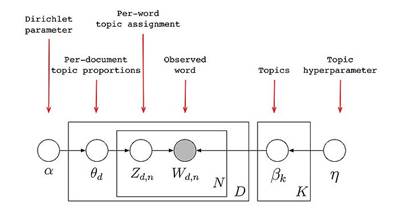
Through this process (figure 1), LDA infers the latent topic structure by analyzing the distribution of words across the entire corpus of ayahs. The output of the LDA algorithm includes:
- Topic Distributions per Ayah: For each ayah, LDA provides a probability distribution over all the identified topics. This indicates the relative prominence of each topic within that specific verse.
- Word Distributions per Topic: For each topic, LDA generates a probability distribution over the vocabulary. This distribution highlights the words most strongly associated with each topic, providing an interpretable representation of the thematic content.
By analyzing these distributions, we gain insight into the thematic composition of each ayah and the semantic meaning associated with each discovered topic. The parameters α and β are crucial in controlling the sparsity of the topic and word distributions, respectively. Appropriate values for these parameters were determined through preliminary experimentation and model evaluation, aiming to achieve a balance between topic coherence and model fit. The number of topics k is a crucial hyperparameter in LDA and was determined through an iterative process of experimentation and evaluation, considering both coherence scores and interpretability of the generated topics.
2-2. Network analysis framework
To analyze the interconnectedness of themes and identify “motor themes” within the Quran, we adopted the network analysis framework introduced by Cobo et al. (2011, 2015). This framework leverages network metrics to characterize and rank thematic importance within a co-occurrence network. The key components of this framework, as applied in our research, are as follows:
- Co-occurrence Network: The foundation of this framework is the co-occurrence network, where nodes represent words and edges connect words that co-occur within the same ayah. This network provides a visual representation of the relationships between words in the Quran.
- Centrality: Centrality measures a node’s (word’s) importance within the network based on its connections. In our study, we used Gephi to calculate centrality, providing a quantitative measure of each word’s influence within the thematic network.
- Density: Density measures the interconnectedness of nodes within a specific neighborhood of the network. A higher density suggests a tighter cluster of semantically related words. Gephi was also employed to calculate density for each word node.
- Topic Centrality and Density: To extend these metrics to the topic level, we aggregated the centrality and density scores of the words associated with each LDA-derived topic. This allowed us to characterize the relative importance and interconnectedness of each topic within the broader network.
- Motor Themes: Cobo et al. (2011, 2015) define “motor themes” as topics characterized by both high centrality and high density. These themes represent core concepts that are not only influential themselves but also strongly interconnected with other important concepts in the network. In our analysis, we identified motor themes by examining the combined centrality and density scores of the LDA topics.
- Distance from Center: To further differentiate and rank the motor themes, we calculated the distance of each motor theme. This distance metric serves as a proxy for thematic prominence, with themes with higher distance considered more core and influential.
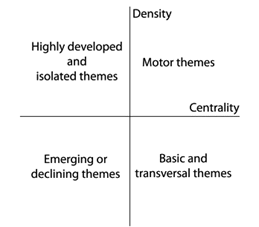
By applying this framework, we gain a comprehensive understanding of the relationships between words and topics in the Quran, identifying the core “motor themes” driving the narrative and quantifying their relative importance based on network position and interconnectedness.
3. Results and Analysis
This section presents the findings of our analysis, beginning with the results of the LDA topic modeling and the subsequent construction and analysis of the co-occurrence network. We detail the process of determining the optimal number of topics, visualize the identified topics, and then present the network metrics used to identify and rank the motor themes within the Quran. This structured presentation aims to provide a clear and comprehensive overview of the key findings that emerge from our computational analysis.
3-1. Topic Modeling and Coherence Analysis:
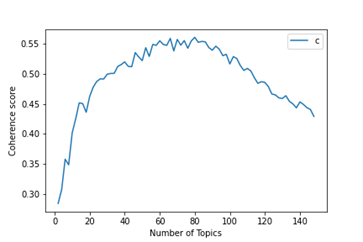
We began by employing Latent Dirichlet Allocation (LDA) topic modeling to extract the underlying thematic structure of the Quran. A key step in this process was determining the optimal number of topics. We evaluated a range of topic numbers and calculated the coherence score for each, aiming to maximize topic coherence (Figure 3). Coherence measures the semantic similarity between the top words within a topic, with higher scores indicating more interpretable and meaningful topics (Röder, Both, & Hinneburg, 2015). Our analysis revealed that the optimal number of topics, based on the coherence value, was 80. This suggests the presence of a rich and nuanced thematic landscape within the Quran.
Topic Visualization:
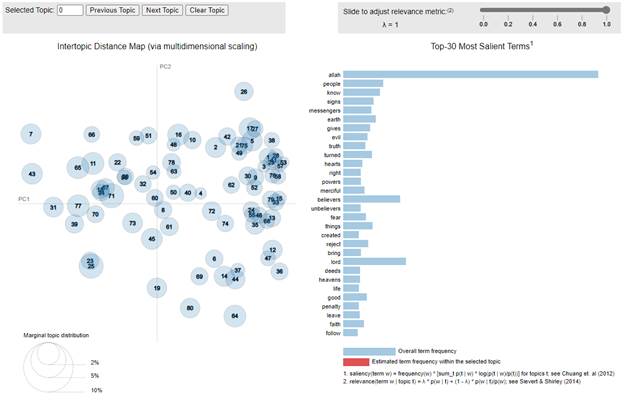
A visualization of the 80 topics generated by the LDA model is presented in Figure 4, created using pyLDAvis. This interactive visualization allows for exploration of the intertopic distance map, showing the relationships between topics, and the most salient terms within each topic. The size of each circle in the intertopic distance map represents the prevalence of the corresponding topic in the corpus, while the distance between circles reflects the semantic distance between topics. Clicking on a specific topic in the visualization reveals the most relevant terms for that topic, providing further insight into its thematic content.
3-2. Co-occurrence Network and Network Metrics:
Following topic modeling, we constructed a co-occurrence network of words based on their co-occurrence within individual ayahs. This network, visualized in Figure 5, provides a graphical representation of the relationships between words in the Quran.
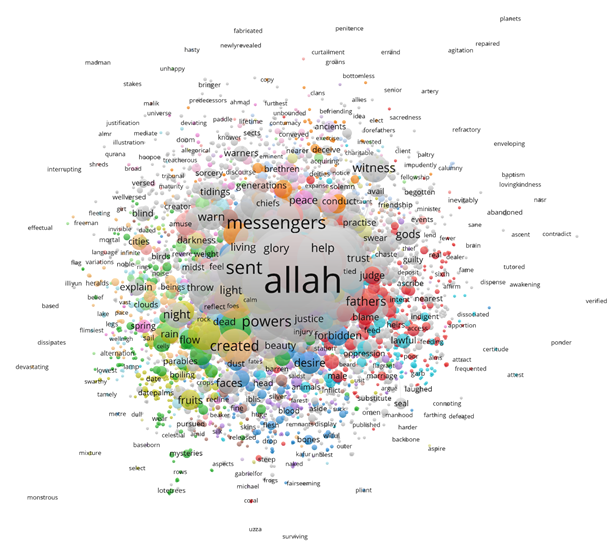
The generated network was then imported into Gephi software for calculation of network metrics. We computed the density and centrality for each word node within the network. Density, as a local measure, quantifies the interconnectedness of a word with its immediate neighbors, while centrality, a global measure, captures a word’s overall importance and influence within the entire network.
3-3. Topic-Level Density and Centrality:
To analyze the topics identified by LDA within the context of the co-occurrence network, we calculated the density and centrality for each topic. This was achieved by averaging the density and centrality scores of the words comprising each topic. This process allowed us to characterize each topic’s interconnectedness and importance within the overall network structure. The results of these calculations are visually represented in Figure 6, a scatter plot where each point represents a topic, positioned according to its centrality and density values.
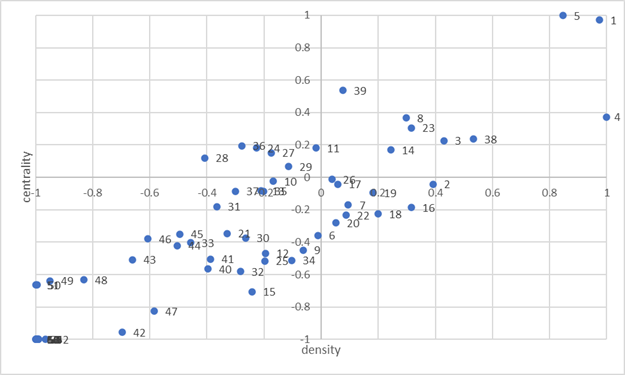
As shown in Figure 6, the topics located in the upper-right quadrant are characterized by high density and high centrality. Following the framework of Cobo et al. (2011, 2015), these topics are identified as “motor themes,” representing central, densely interconnected concepts that drive and shape the overall narrative of the Quran.
3-4. Motor Theme Ranking and Analysis:
To further refine our understanding of the motor themes and their relative importance, we calculated the distance of each motor theme. This distance serves as a measure of thematic prominence, with themes further to the center considered more influential within the overall narrative structure of the Quran. The calculated distances for each motor theme are presented in Table 1.
| Topic | distance |
| 1 | 1.375 |
| 5 | 1.310 |
| 4 | 1.067 |
| 38 | 0.583 |
| 39 | 0.543 |
| 3 | 0.485 |
| 8 | 0.472 |
| 23 | 0.439 |
| 14 | 0.297 |
Based on these distances, we can rank the motor themes in descending order of their distance from the network’s periphery (higher distance indicating greater prominence): Topic 1, Topic 5, Topic 4, Topic 38, Topic 39, Topic 3, Topic 8, Topic 23, and Topic 14. This ranking suggests a hierarchical structure of thematic influence within the Quran, with Topics 1 and 5 occupying the most peripheral positions and, therefore, potentially playing the most significant roles in shaping the overall narrative.
Figure 7 provides a visual representation of these motor themes and their associated keywords, arranged in a concentric layered structure. The core theme, identified as the most central and influential, occupies the innermost circle. Subsequent layers represent the remaining motor themes, positioned in order of decreasing centrality, with the outermost layer containing the theme furthest from the network’s center. This visualization aids in understanding the hierarchical relationship between the motor themes and their relative prominence within the Quranic narrative. This qualitative analysis provides a crucial bridge between the computational findings and established religious understanding, enriching our interpretation of the results.
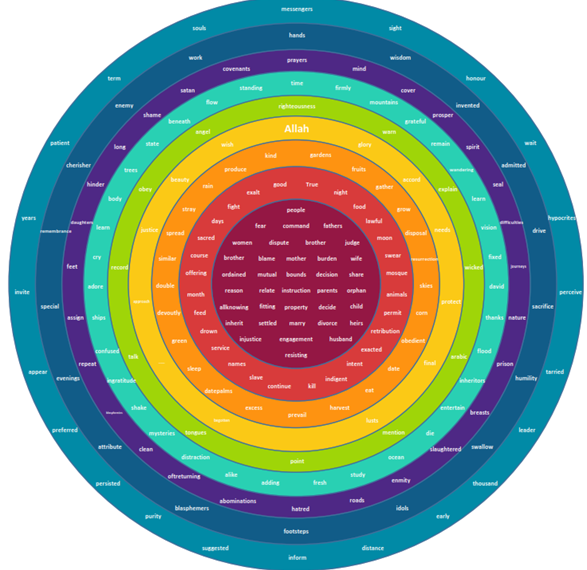
Figure 7. Visual Representation of Motor Themes and Associated Keywords
4. Qualitative analysis of motor themes
The final stage of our analysis involves a qualitative examination of the top-ranked motor themes. This involves exploring the most salient terms associated with each theme, as revealed by the LDA model, and interpreting their meaning and significance within the broader context of Islamic theology and Quranic scholarship.
4-1. Theme 1 (Topic 1): Social Laws and Family Matters
Topic 1, emerges as a dominant theme, highlighting the Quran’s focus on social laws, particularly those pertaining to family matters. As anticipated, the word “people” is the most frequent keyword, emphasizing the broad societal implications of these regulations. This theme appears to encompass several interconnected subtopics:
- Inheritance and Property Rights: Keywords like “inherit,” “property,” “share,” “heirs,” and “nearest” clearly relate to the distribution of wealth and inheritance laws within families. The Quran provides detailed instructions on how inheritance should be divided among family members, ensuring fairness and social stability.
- Marriage and Family Structure: The prominence of words such as “marry,” “marriage,” “wife,” “wives,” “husband,” “mother,” “father,” “parents,” “brother,” “sister,” and “child” points to the Quran’s emphasis on establishing strong family structures. Regulations concerning marriage, divorce (“divorce”), and the rights and responsibilities of family members are central to this subtopic. “Engagement” signifies the importance of formal processes in establishing marital relationships.
- Dispute Resolution and Justice: Terms like “judge,” “case,” “disputed,” “decision,” “blame,” “reason,” and “settled” indicate the Quran’s concern with resolving disputes justly and peacefully within the community. The emphasis on fair judgment and reasoned decision-making reflects the Islamic emphasis on justice and social harmony.
- Guardianship and Care for the Vulnerable: The inclusion of “orphan” suggests the Quran’s focus on protecting the rights and well-being of vulnerable members of society. The Quran frequently emphasizes the importance of caring for orphans and ensuring their fair treatment.
- Divine Commandments and Guidance: Words like “command,” “ordained,” “instruction,” “all-knowing,” “bounds,” “limits,” and “fitting” reinforce the divine origin of these social laws. They underscore that these regulations are not merely human constructs but divinely ordained principles meant to guide human behavior and establish a just and equitable society. The term “burdens” may refer to the responsibilities that come with these commandments, while “mutual” highlights the reciprocal nature of rights and obligations within families and communities. “Resisting” could signify the consequences of defying these divine instructions. “Taketh” may refer to God’s taking account of people’s actions in relation to these laws. “Fear” likely relates to the reverence and awe due to God, motivating adherence to His commands. “Descend” probably refers to the revelation of these laws from God. “Women” suggests the specific attention given to women’s rights and roles within the Islamic legal framework.
The interconnectedness of these subtopics reveals a comprehensive approach to social organization, with divine guidance providing a framework for building strong families, resolving disputes, and protecting the vulnerable. The prominent position of Topic 1 in the network analysis underscores its fundamental role in shaping the Quran’s message and its relevance to all aspects of human life.
4-2. Theme 2 (Topic 5): Ritual Observances, Ethics, and Social Justice
Topic 5, reveals a complex interplay of themes related to ritual practices, ethical conduct, and social justice within Islam. The diverse keywords within this topic suggest several interconnected subtopics:
- Ritual Observances and Sacred Practices: Keywords such as “night,” “days,” “month,” “moon,” “fast,” “mosque,” “sacred,” “pilgrim,” and “offering” clearly point to Islamic rituals and practices. The mention of “night” and “days” could relate to the timing of prayers and other observances. “Month” and “moon” likely refer to the lunar calendar and its significance in determining Islamic months and festivals, especially Ramadan and the associated practice of fasting. “Mosque” represents the central place of worship in Islam. “Pilgrim” relates to the Hajj pilgrimage, one of the five pillars of Islam. “Offering” could refer to sacrifices or charitable giving.
- Dietary Laws and Permitted Actions: The words “food,” “lawful,” “permitted,” “animals,” “feed,” “feeding,” and “catch” highlight the Islamic dietary laws (Halal) and permissible actions related to food consumption. These laws govern what foods are considered lawful and how animals should be treated and slaughtered.
- Ethical Conduct and Morality: Keywords like “good,” “true,” “exalted,” “chastity,” “intent,” “injustice,” “rancor,” “hostility,” “futile,” “inordinate,” “infidelity,” and “merges” reflect the emphasis on ethical and moral conduct in Islam. “Good” and “true” likely refer to virtuous actions and truthful speech. “Exalted” might signify the high moral standards expected of Muslims. “Chastity” underscores the importance of modesty and purity in personal conduct. “Intent” highlights the significance of inner motivations in determining the morality of actions. The negative terms like “rancor,” “hostility,” “futile,” “inordinate,” and “infidelity” likely represent behaviors condemned within the Quranic ethical framework, while “merges” may relate to the blurring of moral boundaries.
- Social Justice and Compassion: The presence of “slave,” “indigent,” “compensation,” “retribution,” “remit,” and “exacted” suggests themes of social justice, compassion, and the importance of fulfilling obligations. The Quran advocates for the just treatment of slaves and encourages their emancipation. “Indigent” highlights the concern for the poor and needy, while “compensation” and “retribution” likely refer to legal principles of justice and recompense. “Remit” might relate to forgiveness or the remission of sins. “Exacted” likely refers to the fulfillment of promises or obligations.
- Subjugation and Service: The term “subjected” might refer to the submission of oneself to God’s will or the subjugation of one’s desires to higher ethical principles. “Service” reinforces the concept of devotion and obedience to God.
- Garb and Outward Appearance: The inclusion of “garb” suggests the importance of modest dress and outward appearance in Islam. This likely refers to the Islamic guidelines on appropriate attire.
- Strict Adherence and Conditions: Words like “strict” and “conditions” emphasize the importance of adhering to the prescribed rules and regulations within Islam, particularly concerning ritual practices and ethical conduct. “Continue” might relate to the consistent practice of religious obligations. “Scale” possibly signifies the precise measurement and fairness required in various dealings, such as trade and justice. “Compel” and “precincts” are more ambiguous in this context but might refer to the enforcement of religious laws and the sanctity of certain spaces or times.
The interplay of these subtopics highlights the comprehensive nature of Islamic teachings, encompassing personal piety, social responsibility, and ethical conduct. The peripheral position of Topic 5 in the network analysis underscores its pervasive influence on the Quran’s message and its relevance to various facets of human life, from personal devotion to social interactions. The inclusion of both prescriptive and proscriptive terms suggests a balanced approach to ethical guidance, promoting virtuous actions while condemning harmful behaviors.
4-3. Theme 3 (Topic 4): Agriculture, Sustenance, and Divine Blessings
Topic 4, focuses on themes related to agriculture, sustenance, and the divine blessings that provide for humanity. The keywords paint a vivid picture of agricultural life and its dependence on natural processes governed by a higher power. Several subtopics emerge within this theme:
- Agricultural Practices and Produce: Words like “gardens,” “fruits,” “produce,” “grows,” “spread,” “crops,” “field,” “planted,” “harvest,” “grain,” “date,” “date-palms,” “olives,” “vines,” “tilth,” and “corn” depict various aspects of agriculture and the cultivation of different crops. The Quran emphasizes the importance of agriculture as a means of sustenance and highlights the diversity of produce provided by the earth.
- Natural Processes and Divine Provision: Terms such as “rain,” “skies,” “stream,” “green,” “arises,” “withered,” and “substance” reflect the natural cycles of growth and decay and the dependence of agriculture on these processes. The Quran emphasizes the role of rain and water in sustaining life and highlights God’s role in providing these essential resources.
- Abundance and Increase: Keywords like “increase,” “doubled,” “excess,” “heap,” and “flocks” signify the abundance and blessings bestowed by God. The Quran speaks of the multiplication of resources and the bounty of the harvest as signs of divine favor.
- Human Responsibility and Resource Management: Words like “spend,” “gather,” “disposal,” “proper,” and “eaten” suggest the human role in managing and utilizing these resources responsibly. The Quran encourages moderation and discourages wastefulness.
- Diversity and Variation: The inclusion of “kind,” “similar,” “differed,” and “altogether” highlights the diversity within creation and the variations in agricultural produce.
- Spiritual Growth and Obedience: Terms like “devoutly,” “recognise,” “obedient,” and “schisms” may connect the agricultural theme to broader spiritual concepts. “Devoutly” and “obedient” likely refer to the proper attitude towards God, while “recognise” might relate to acknowledging God’s blessings. “Schisms” could signify the negative consequences of disunity and discord, possibly in the context of sharing resources or managing agricultural lands.
- Life Cycles and Resurrection: The mention of “resurrection” suggests a connection between the cyclical nature of agricultural processes and the concept of rebirth in the afterlife. The Quran uses agricultural metaphors to illustrate the concept of resurrection.
- Time and Seasons: Words like “beginneth,” “short,” “absence,” “prevailed,” and “hang” likely refer to the passage of time, the changing seasons, and their impact on agriculture. “Sleep” might allude to the dormant period of seeds or plants before they sprout.
The interconnectedness of these subtopics emphasizes the close relationship between humanity, nature, and the divine. The Quran portrays agriculture not merely as a means of sustenance but also as a reminder of God’s blessings and an opportunity for spiritual reflection. The prominent position of Topic 4 in the network analysis suggests its importance in the overall message of the Quran, highlighting the interconnectedness of the physical and spiritual realms.
4-4. Theme 4 (Topic 38): Divine Attributes, Justice, and Community Bonds
Topic 38, explores the nature of God, His attributes, and the principles of justice and communal harmony that He has established. Several interwoven subtopics can be discerned within this theme:
- Divine Attributes and Majesty: The prominent use of “Allah” along with words like “glory,” “majesty,” “beauty,” “blessedness,” “self-sufficient,” and “well-pleased” emphasizes the divine attributes and the reverence due to God. The Quran frequently extols God’s greatness, beauty, and self-sufficiency.
- Justice and Right Conduct: Keywords like “justice,” “accord,” “determination,” “warrant,” “befitting,” “consonant,” “crystal-clear,” “represent,” and “factor” emphasize the importance of justice, fairness, and adherence to divine principles. The Quran consistently stresses the importance of just dealings and upholding the truth.
- Community and Brotherhood: The inclusion of “brotherhood,” “blood-relations,” “Muhajirs,” and “Ansar” highlights the importance of community bonds and mutual support within the Muslim community. The Muhajirs and Ansar were the early Muslim emigrants and their helpers in Medina, respectively, representing a powerful example of solidarity and brotherhood in Islamic history.
- Protection and Guidance: Words like “protect,” “needs,” “approaches,” “final,” “beckon,” and “vanguard” suggest divine protection, guidance, and the ultimate destination of humanity. The Quran often speaks of God as a protector and guide, leading believers towards the right path. “Final” and “approaches” likely refer to the Day of Judgment and the approaching end of this worldly life.
- Rejection of Falsehood and Idolatry: Terms such as “swerve,” “distort,” “idolaters,” “himnay,” and “evil-then” likely relate to the rejection of falsehood, idolatry, and corrupt practices. The Quran condemns idolatry and calls people to turn away from false beliefs.
- Resisting Temptation and Worldly Desires: Keywords like “wish,” “lusts,” “greedy,” “paramours,” “girls,” and “orchards” might refer to the temptations and desires that can lead people astray. The Quran cautions against excessive attachment to worldly possessions and pleasures. “Begotten” and “posterity” could relate to concerns about lineage and inheritance, possibly in the context of rejecting false claims or ensuring legitimate succession. “Usage” might refer to the proper use of resources and the avoidance of extravagance. “Owners” might refer to the concept of stewardship and responsible ownership.
- Inheritance and Legacy: “Bequest,” “successors,” and “life-even” likely relate to inheritance, legacy, and the continuation of good deeds even after death. The Quran encourages believers to leave behind a positive legacy for future generations.
- Well-being and Felicity: “Felicity” and “well-planted” may allude to the state of well-being and contentment that comes from following divine guidance. “Selves” may refer to the importance of self-reflection and inner purification.
The convergence of these subtopics within Topic 38 underscores the holistic nature of the Quranic message. It emphasizes not only the divine attributes but also the practical implications of faith in shaping individual behavior and social interactions. The central position of this theme in the network analysis highlights its importance in providing a framework for understanding the relationship between God, humanity, and the wo(rld.
4-5. Theme 5 (Topic 39): Revelation, Prophethood, and Moral Guidance
Topic 39, focuses on the process of divine revelation, the role of prophets, and the moral guidance provided through scripture. Several interconnected subtopics emerge:
- Divine Revelation and Messengers: Keywords like “angel,” “Gabrielfor” (referring to the Angel Gabriel), “warn,” “explain,” “Arabic,” “tongues,” “mention,” “preserve,” “record,” “noble,” and “night-visitant” strongly relate to the process of divine revelation and the role of angelic messengers, particularly Gabriel, in conveying God’s message to the prophets. The mention of “Arabic” and “tongues” likely refers to the language of the Quranic revelation and the importance of clear communication. “Preserve” and “record” likely allude to the divine preservation of the revealed scriptures.
- Prophethood and Obedience: “Obey,” “righteousness,” “wicked,” and “mortal” connect to the themes of prophethood, obedience to God’s commands, and the contrast between righteous and wicked behavior. The Quran repeatedly emphasizes the importance of obeying God and His messengers and warns against the consequences of disobedience. “Mortal” serves as a reminder of human limitations and the ultimate authority of God.
- Guidance and Clarification: Words like “point,” “perchance,” “based,” “furthermore,” “notably,” “only-say,” and “attest” suggest the clarifying and guiding nature of revelation. The Quran provides guidance on various matters of belief and practice, and these terms highlight the process of explaining and clarifying divine truths.
- Challenges and Opposition to Prophets: Keywords such as “attack,” “assailants,” “malicious,” “belittle,” “justification,” and “sand-tracts” likely refer to the challenges and opposition faced by prophets from those who reject their message. The Quran narrates the stories of various prophets and the difficulties they encountered in conveying God’s message.
- Miracles and Divine Power: Terms like “babe,” “cradle,” “tremor,” “amazement,” and “effectual” may allude to miraculous events associated with prophets and divine intervention. For example, the mention of “babe” and “cradle” could relate to the miraculous nature of Jesus’s birth, while “tremor” and “amazement” might refer to awe-inspiring events that demonstrate God’s power.
- Divine Judgment and Afterlife: The words “prepared,” “sijjin,” “Illiyin” (or “Illiyun”), and “elevated” likely relate to the themes of divine judgment, reward, and punishment in the afterlife. Sijjin and Illiyin are mentioned in the Quran in connection with the recording of deeds, suggesting different destinies for the righteous and the wicked. “Elevated” may refer to the exalted status of the righteous in Paradise.
- Angelic Beings and Intercession: The mention of “Michael,” another prominent angel, reinforces the theme of angelic involvement in divine affairs. The Quran mentions Michael as a powerful angel, often associated with mercy and provision. “Talk” and “inclination” could relate to divine inspiration and guidance, possibly through angelic intermediaries.
- Tone and Manner of Revelation: Words like “mildly,” “shorten,” “foreign,” “extol,” and “banquet” may relate to the tone and manner of divine communication. “Mildly” suggests the gentle nature of some revelations, while “shorten” could refer to concise and direct communication. “Foreign” might allude to the prophets being perceived as outsiders or bringing unfamiliar teachings. “Extol” and “banquet” possibly relate to the positive aspects of receiving divine guidance and the spiritual nourishment it provides.
The interconnectedness of these subtopics highlights the central role of revelation and prophethood in Islam. The Quran, as the final revelation, provides guidance for humanity, clarifying moral principles and offering a path to righteousness. The proximity of Topic 39 to the network’s center emphasizes its importance in understanding the core message of the Quran and the relationship between God and humanity.
4-6. Theme 6 (Topic 3): Signs of God in Nature and Human Reflection
Topic 3, emphasizes the importance of reflecting on the signs of God in nature and the human condition. The keywords evoke imagery of natural phenomena and encourage contemplation on their deeper meaning. Several subtopics can be identified:
- Natural Phenomena and the Power of God: Words like “mountains,” “trees,” “ships,” “ocean,” “waves,” “flood,” “flow,” “stars,” “earth,” “sky,” “sun,” “moon,” and “night” depict various aspects of the natural world, pointing to the grandeur and power of creation. The Quran frequently encourages observation of these natural phenomena as signs of God’s majesty and wisdom. “Standing,” “firmly,” “fixed,” and “large” likely emphasize the immensity and stability of these creations, highlighting God’s control over the natural order.
- Human Perception and Understanding: Terms like “vision,” “learn,” “study,” “mysteries,” “confused,” and “image” relate to human perception, the pursuit of knowledge, and the limitations of human understanding. The Quran acknowledges the vastness of creation and the mysteries that lie beyond human comprehension, encouraging humility and continued learning.
- Time and Change: Words such as “time,” “state,” “remains,” “dies,” “alternation,” “second,” “adding,” and “released” point to the passage of time, the changing nature of the world, and the finite nature of human existence. The Quran emphasizes the importance of utilizing time wisely and preparing for the afterlife.
- Gratitude and Ingratitude: “Grateful,” “thanks,” and “ingratitude” highlight the importance of acknowledging God’s blessings and the consequences of ingratitude. The Quran frequently emphasizes the importance of expressing gratitude for the gifts bestowed by God.
- Human Actions and Consequences: Terms like “wandering,” “body,” “crieth,” “distraction,” “heedless,” “pains,” “bitter,” and “wear” relate to human actions, their consequences, and the human condition. “Wandering” might refer to being lost or aimless without divine guidance. “Body” suggests the physical and material aspects of human existence. “Crieth” could refer to expressions of pain or supplication. “Distraction,” “heedless,” and “wear” might relate to the negative consequences of being inattentive to spiritual matters and succumbing to worldly temptations. “Pains” and “bitter” likely refer to the hardships and difficulties faced in life.
- Spiritual Growth and Adoration: “Adore,” “David,” and “beneath” suggest themes of worship, devotion, and humility before God. David is a significant figure in Islamic tradition, known for his devotion and piety. “Beneath” might symbolize humility and submission to God’s will.
- Blessings and Ornamentation: “Fresh,” “palm-tree,” “carpet,” “ornaments,” and “finest” likely refer to the blessings and beauty provided by God, both in the natural world and in the afterlife. The Quran describes Paradise as a place of abundant beauty and comfort. “Succeed” and “inheritors” may relate to the rewards awaiting the righteous in the hereafter.
The interplay of these subtopics encourages reflection on the interconnectedness of the natural world, human existence, and the divine. The Quran uses natural imagery to convey spiritual truths and to remind humanity of God’s power and wisdom. The central position of Topic 3 in the network analysis suggests its importance in fostering a deeper understanding of the relationship between God, humanity, and the universe.
4-7. Theme 7 (Topic 8): Spiritual Struggle, Purity, and Social Responsibility
Topic 8, delves into the themes of spiritual struggle, the importance of purity, and the fulfillment of social responsibilities. The keywords reveal a complex interplay of internal and external challenges, ethical considerations, and the pursuit of spiritual well-being. Several subtopics can be discerned:
- Spiritual Struggle and Temptation: Words like “Satan,” “blasphemies,” “hinder,” “difficulties,” “nature,” “spirit,” “overcome,” “stirred,” “suspicions,” and “calm” suggest the internal struggles against temptation and the influence of Satan. The Quran acknowledges the challenges faced by individuals in maintaining their spiritual integrity and encourages steadfastness in resisting negative influences. “Oft-returning” might refer to the persistent nature of these temptations.
- Purity and Cleanliness: Terms like “clean,” “wash,” “impure,” “abominations,” “ceremonies,” and “wholly” highlight the importance of ritual purity and cleanliness in Islam. The Quran prescribes specific rituals for purification, both physical and spiritual. “Slaughtered” likely refers to the proper methods of animal slaughter for consumption, emphasizing the importance of avoiding impure practices.
- Prayers and Covenants: The prominent mention of “prayers” and “covenants” underscores the importance of fulfilling religious obligations and upholding agreements. Prayer is a central pillar of Islam, and the Quran emphasizes the importance of keeping promises and fulfilling commitments.
- Social Responsibility and Justice: Keywords such as “daughters,” “prison,” “captives,” “paid,” “guests,” “usury,” “deprive,” and “prosper” touch upon various social responsibilities. The mention of “daughters” likely relates to their protection and fair treatment. “Prison” and “captives” might refer to the just treatment of prisoners and the importance of compassion. “Paid” could relate to fair wages and fulfilling financial obligations. “Guests” highlights the importance of hospitality and generosity. “Usury” is explicitly condemned in the Quran as an unjust practice. “Deprive” and “prosper” likely relate to the ethical implications of economic activity and the importance of ensuring equitable distribution of wealth.
- Journeys and Hardships: “Feet,” “journeys,” “roads,” “sand,” “arms,” “arrows,” and “long” suggest physical and metaphorical journeys, often associated with hardships and challenges. The Quran frequently uses the metaphor of a journey to describe the path of faith and the tests faced by believers. “Arms” and “arrows” may refer to the struggles and conflicts encountered along this path.
- Concealment and Shame: “Cover” and “shame” likely relate to the importance of modesty and concealing private matters. The Quran encourages modesty in dress and behavior.
- Mental and Emotional States: “Mind,” “repeateth,” “possibly,” “avoid,” “eschew,” “inevitably,” “hatred,” and “enmity” refer to mental and emotional states, including the importance of mindfulness, avoiding negative emotions like hatred and enmity, and acknowledging the potential consequences of one’s actions. “Assign” may refer to the individual responsibility for one’s thoughts and actions.
- Dedication and Sacrifice: “Breasts,” “dedicate,” and “seal” might relate to themes of dedication, sacrifice, and commitment. “Breasts” possibly refers to nurturing and care, while “dedicate” and “seal” may suggest the unwavering commitment required in following the path of righteousness.
The interplay of these subtopics highlights the multifaceted nature of spiritual development and the importance of balancing personal piety with social responsibility. The central position of Topic 8 in the network analysis emphasizes its significance in the overall message of the Quran, reminding individuals of the ongoing struggle against internal and external challenges, the pursuit of purity and righteousness, and the fulfillment of obligations towards God and society.
4-8. Theme 8 (Topic 23): Actions, Consequences, and Divine Authority
Topic 23, explores the themes of human actions, their consequences, and the ultimate authority of God. The keywords suggest a focus on accountability, the futility of opposing divine will, and the importance of humility and remembrance. Several subtopics can be identified:
- Human Actions and their Consequences: Words like “bring,” “hands,” “work,” “drive,” “allowed,” “apart,” “consequences,” “footsteps,” “quick,” “straightway,” “accrue,” “allotted,” “blameworthy,” “cured,” “detained,” and “object” relate to human agency, the choices individuals make, and the outcomes that follow. The Quran emphasizes the principle of accountability, where individuals are responsible for their deeds.
- Opposition to God and Futility of Disbelief: Terms such as “enemy,” “invented,” “blasphemers,” “idols,” “faked,” “trick,” “magicians,” and “godhead” likely refer to those who oppose God and reject faith. “Invented,” “faked,” and “trick” suggest the deceptive nature of falsehood and the futility of attempts to undermine divine authority. The mention of “magicians” likely relates to stories in the Quran where magicians try to challenge prophets but ultimately fail.
- Divine Authority and Attributes: “Cherisher,” “wisdom,” “remembrance,” “revere,” “inner,” “reserve,” and “attribute” emphasize God’s role as the cherisher and sustainer of all creation, highlighting His wisdom and the importance of remembering and revering Him. “Inner” and “reserve” might suggest the hidden aspects of God’s knowledge and power, while “attribute” refers to the qualities and characteristics ascribed to God.
- Prophets and Messengers: The mention of “Yahya” (John the Baptist) points to the role of prophets in conveying God’s message and guiding humanity. The Quran narrates the stories of various prophets, emphasizing their steadfastness in conveying divine truth.
- Humility and Gratitude: “Humility,” “grateful,” and “ingrate” highlight the importance of humility before God and expressing gratitude for His blessings. The Quran encourages believers to cultivate humility and to acknowledge God’s favors.
- Sacrifice and Devotion: “Sacrifice,” “special,” “evenings,” “abounding,” “pasture,” “she-camel,” and “desolate” might relate to themes of sacrifice, devotion, and the challenges faced in adhering to God’s will. “Sacrifice” likely refers to both ritual sacrifices and the sacrifices made in the pursuit of righteousness. “She-camel” could relate to specific Quranic narratives involving a she-camel as a sign or test. “Desolate” and “destitution” might refer to the hardships and trials faced by believers.
- Social and Moral Conduct: “Admitted,” “swallow,” “avowed,” “foremost,” “line,” “institutions,” and “emulation” likely relate to social and moral conduct within a community. “Admitted” and “avowed” might refer to acknowledging the truth or confessing one’s sins. “Foremost” and “line” could suggest the importance of following righteous leaders and adhering to established principles. “Institutions” likely refer to social structures and norms. “Emulation” might suggest the importance of following good examples.
The interplay of these subtopics emphasizes the importance of aligning one’s actions with divine will. The Quran highlights the consequences of both righteous and unrighteous actions, emphasizing the ultimate authority of God and the importance of humility, remembrance, and gratitude. The central position of Topic 23 in the network analysis underscores its relevance to the core message of the Quran, reminding individuals of their accountability before God and encouraging them to strive for righteousness in all aspects of life.
4-9. Theme 9 (Topic 14): Patience, Perseverance, and the Unseen
Topic 14, emphasizes the importance of patience, perseverance, and trust in God’s plan, especially when faced with challenges and uncertainty. The keywords highlight the limitations of human perception and the significance of waiting for the appointed time. Several key subtopics emerge:
- Messengers and Divine Timing: The prominence of “messengers,” combined with words like “term,” “wait,” “years,” “tarried,” “nearer,” “distance,” “inform,” “appear,” and “suggested,” points to the role of messengers and the concept of divine timing. The Quran emphasizes that God’s plan unfolds according to His timetable, and messengers must patiently convey their message, even when faced with resistance or delayed results.
- Patience and Perseverance: Keywords like “patient,” “persisted,” “greater,” “longer,” “fatigue,” and “annoyance” underscore the virtues of patience and perseverance, especially when facing adversity or prolonged trials. The Quran frequently encourages believers to remain steadfast in their faith and to patiently endure difficulties.
- Limitations of Human Perception: Words like “sight,” “perceive,” “felt,” “screen,” “remote,” and “unseen” highlight the limitations of human perception and the existence of a reality beyond what is immediately visible. The Quran emphasizes that there are unseen forces and realities at play, encouraging trust in God’s wisdom even when things are not fully understood.
- Hypocrisy and Deception: The inclusion of “hypocrites,” “hypocrisy,” “calumny,” and “misdeeds” suggests the challenges posed by those who outwardly profess faith but harbor insincere intentions. The Quran warns against hypocrisy and emphasizes the importance of genuine belief.
- Tests and Trials: “Souls,” “honour,” “preferred,” “invitest,” “instead,” and “powerless” relate to the tests and trials that individuals face in life. The Quran describes life as a test and emphasizes the importance of choosing righteousness over fleeting desires.
- Leadership and Guidance: The mention of “leader” suggests the importance of righteous leadership and guidance in navigating these challenges. The Quran highlights the qualities of good leaders and their role in guiding the community.
- Community and Social Dynamics: “Folk,” “ladies,” “Medina,” “cult,” “pious,” “maintenance,” and “meal” might refer to social dynamics within a community, including the interactions between different groups and the importance of mutual support and provision. “Medina” likely refers to the city where the Prophet Muhammad established the first Muslim community, highlighting the social and political dimensions of Islamic faith.
- Responding to Adversity: Words like “conceived,” “disperse,” “obstruct,” “roused,” “stage,” “Samiri,” “fragments,” and “thousand” could relate to specific Quranic narratives and the different ways individuals respond to adversity. “Samiri” is a figure mentioned in the Quran in connection with the worship of a golden calf, representing a deviation from true faith. “Thousand” might refer to large numbers, possibly in the context of armies or followers.
The central position of Topic 14 in the network analysis underscores its importance in the overall message of the Quran. It emphasizes that faith requires patience, perseverance, and trust in God’s plan, even when faced with uncertainty, opposition, or prolonged hardship. The theme encourages believers to look beyond the immediate and visible and to maintain their focus on the ultimate goal of spiritual fulfillment.
“This study identifies nine key motor themes in the Quran, including social laws, divine attributes, and spiritual struggle, demonstrating that the text’s core concepts not only exhibit high density and centrality but are also positioned within an interconnected network of meaning. The hybrid methodology employed enables a dynamic understanding of the Quran’s thematic relationships, which can serve as a valuable complement to traditional interpretations.”
5. Conclusion
This study has demonstrated the potential of combining topic modeling and network analysis to uncover the “motor themes” driving the narrative of the Quran. By identifying and ranking these central, interconnected themes, we have gained valuable insights into the complex thematic tapestry of this sacred text. Our analysis revealed nine prominent motor themes, each contributing to a deeper understanding of the Quran’s multifaceted message. These themes, ranging from social laws and family matters to divine attributes, revelation, and spiritual struggle, highlight the interconnectedness of various aspects of Islamic teachings, encompassing personal piety, social responsibility, and ethical conduct. The network-based approach allows us to visualize and quantify the relationships between these themes, offering a complementary perspective to traditional Quranic exegesis. While our analysis utilized an English translation, acknowledging the inherent limitations of this approach, the methodology itself presents a robust framework for future research applying this technique to the original Arabic text. Furthermore, incorporating other computational methods like sentiment analysis or named entity recognition could enrich our understanding of the Quran’s nuanced language and subtle meanings. This research serves as a valuable foundation for future computational explorations of religious texts, opening new avenues for interdisciplinary scholarship and contributing to a more comprehensive appreciation of the Quran’s enduring wisdom.
References:
- Abdul-Raof, H. (2001). Qur’an translation. Routledge.
- Alhawarat, M., Hegazi, M., & Hilal, A. (2015). Processing the text of the Holy Quran: A text mining study. International Journal of Advanced Computer Science and Applications, 6(2), 262–267.
- Amoli, A. J. (2008). Tafsir Tasnim. Dar al-Hadith.
- Bentrcia, R., Zidat, S., & Marir, F. (2017). Extracting semantic relations from the Quranic Arabic based on Arabic conjunctive patterns. Journal of King Saud University – Computer and Information Sciences, 30(3).
- Blei, D. M., Ng, A. Y., & Jordan, M. I. (2003). Latent dirichlet allocation. Journal of machine Learning research, 3(Jan), 993–1022.
- Cobo, M. J., Martínez, M. A., Gutiérrez-Salcedo, M., Fujita, H., & Herrera-Viedma, E. (2015). 25 years at Knowledge-Based Systems: A bibliometric analysis. Knowledge-Based Systems.
- Cobo, M.J., López-Herrera, A.G., Herrera-Viedma, E., & Herrera, F. (2011). An approach for detecting, quantifying, and visualizing the evolution of a research field: A practical application to the fuzzy sets theory field. Journal of Informetrics, 5(1), 146-166.
- El Fadl, K. (2002). Speaking in God’s name: Islamic law, authority and women. Oneworld Publications.
- Esack, F. (1997). Qur’an, liberation & pluralism. Oneworld Publications.
- Grimmer, J., & Stewart, B. M. (2013). Text as data: The promise and pitfalls of automatic content analysis methods for political texts. Political Analysis, 21(3), 267–297.
- Leaman, O. (2006). The Qur’an: An encyclopedia. Routledge.
- Marir, F., Tlemsani, I., & Majdalwieh, M. (2019). A recursive co-occurrence text mining of the Quran to build corpora for Islamic banking business processes. In International Conference on Industrial, Engineering and Other Applications of Applied Intelligent Systems (pp. 306–312). Springer.
- Nasr, S. H. (2003). The heart of Islam: Enduring values for humanity. HarperOne.
- Panju, M. H. (2014). Statistical extraction and visualization of topics in the Qur’an corpus (Master’s thesis). University of Waterloo, Waterloo, Canada.
- Qutb, S. (1977). In the shade of the Qur’an. Islamic Foundation.
- Rippin, A. (Ed.). (2001). Approaches to the history of the interpretation of the Qur’an. Oxford University Press.
- Röder, M., Both, A., & Hinneburg, A. (2015). Exploring the space of topic coherence measures. Proceedings of the eighth ACM international conference on Web search and data mining, 399-408.
- Scott, J. (2017). Social network analysis. Sage.
- Siddiqui, M. A., Faraz, S. M., & Sattar, S. A. (2013). Discovering the thematic structure of the Quran using probabilistic topic model. In 2013 Taibah University International Conference on Advances in Information Technology for the Holy Quran and Its Sciences (pp. 234–239). IEEE.
- Tabataba’i, M. H. (n.d.). Al-Mizan fi Tafsir al-Quran. Islamic Publications Office.
- RM Losee. (2012). Text retrieval and filtering: Analytic models of performance. springer.