Halal and Haram Foods: The Microbiota-Gut-Brain Axis
"Did you know that the trillions of microorganisms residing in your gut not only influence your physical health but also govern your thoughts, emotions, and behaviors? The discovery of the connection between halal and haram foods and the microbiota-gut-brain axis opens a new window into the scientific understanding of religious dietary injunctions."
Elie Hoseinian Azghadi | Laleh Rafat Motavalli | Hashem Miri Hakimabad et al
"In an era where science and religion are often perceived as opposing forces, this research bridges divine wisdom and modern biomedical findings. The Holy Quran, centuries ago, alluded to the impact of food on the human psyche, and today, science deciphers this mechanism through the discovery of the microbiota-gut-brain axis. This article not only delineates the frontiers of human knowledge but also challenges the scientific community with a profound question: Can modern tools empirically redefine the philosophy behind the prohibition of haram foods?"
Abstract
The Almighty God, throughout the Holy Quran, encourages Muslims to consume halal foods and prohibits haram foods. Various hadiths from the Infallible Imams (AS) further elaborate on this; for instance, pork consumption is linked to diminished moral vigilance (bi-ghayrati), while blood consumption is associated with increased behavioral aggression. But can different types of food influence neurodevelopmental disorders, cognition, and human behavior? The human body contains neural pathways connecting the brain to the abdominal region and the digestive system. This communication pathway, known as the gut-brain axis, was long thought to be unidirectional, with the brain solely commanding the gut. However, scientific research over the past 15 years has highlighted the gut-brain axis’s role in maintaining internal homeostasis. The subsequent emergence of the microbiota—trillions of microorganisms inhabiting and on our bodies—as a key regulator of gut-brain function has led to the distinct recognition of the microbiota-gut-brain axis. In this observational study, we aim to provide readers with an overview of current scientific understanding in this field: the extent to which microbiota’s influence on the human body and mind is known and what remains unexplored.
Keywords: Microbiota-gut-brain axis, gut microbiota, halal and haram foods.
1. Introduction
The influence of food and dietary patterns on human physical health is not a novel subject. In recent decades, extensive research has explored the correlation between various diets and human health. Numerous studies have investigated the effects of dietary regimens, such as fasting, on treating cancers and neurological disorders like Parkinson’s and Alzheimer’s [1–4]. The Quran repeatedly emphasizes the consumption of halal foods while forbidding haram foods. Hadiths further specify behavioral consequences; for example, pork is tied to moral decline, and blood consumption is linked to heightened aggression. But do different foods measurably impact neurodevelopmental, cognitive, and behavioral outcomes? While the effects of alcohol and narcotics on human behavior and brain function are undeniable, do other dietary components similarly alter brain activity?
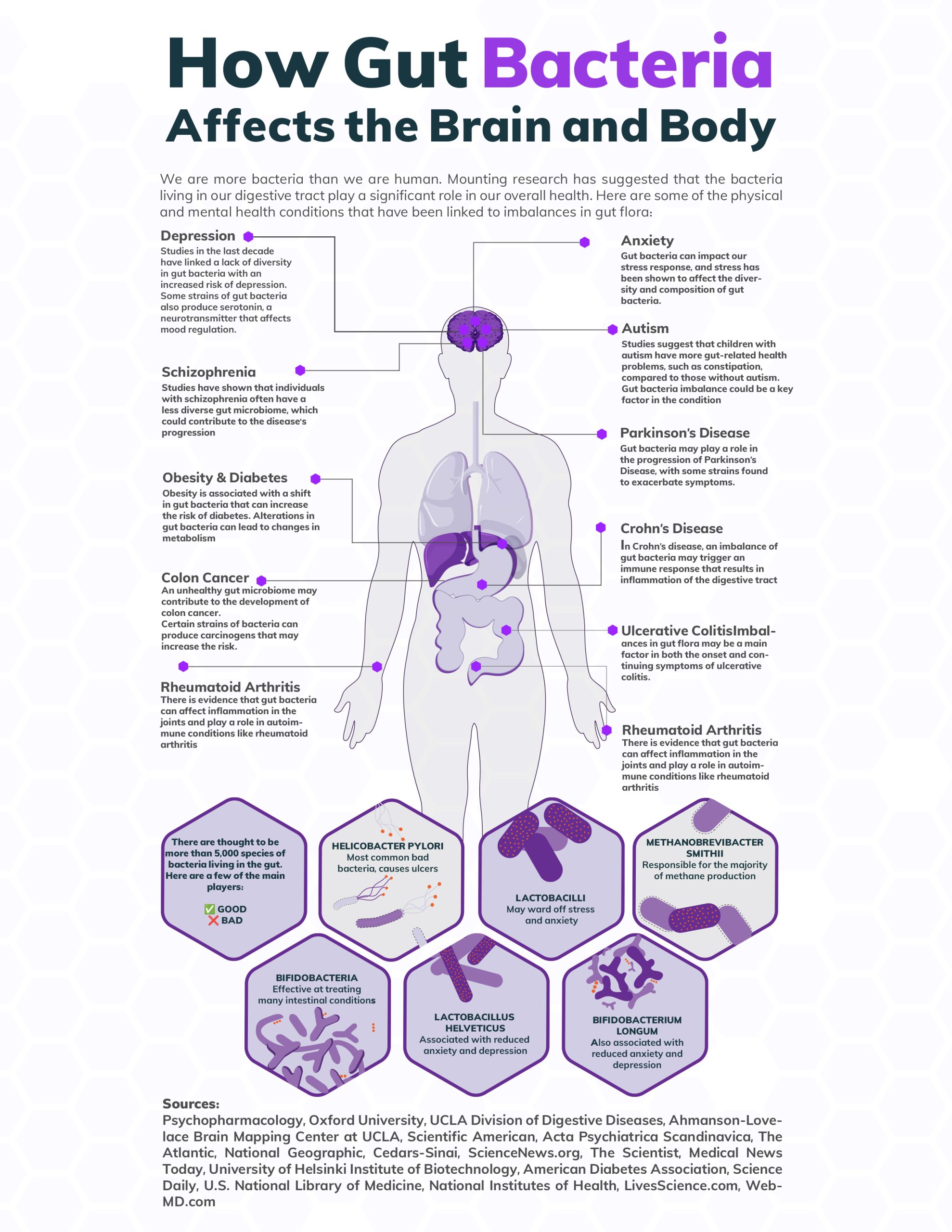
The human body contains neural pathways connecting the brain to the digestive system, giving rise to the term gut-brain axis. Until recently, this axis was considered unidirectional, with the brain influencing the gut. Its role in homeostasis has long intrigued researchers. However, over the past 15 years, the discovery of the microbiota—trillions of microorganisms coexisting with us—as a pivotal regulator of gut-brain function has reshaped this understanding, leading to the microbiota-gut-brain axis paradigm [5].
We inhabit a microbial world. Microbes predated humans by hundreds of millions of years, and our bodies have always received microbial signals [6]. The human microbiota refers to the trillions of microorganisms inhabiting and colonizing us. Over the past two decades, microbiome research has accelerated exponentially, revealing how these microscopic residents shape our daily lives. It is now evident that microbiota critically determines human health and disease, serving as a key regulator of host physiology. Microbiota and the brain communicate via multiple pathways, making the microbiota-gut-brain axis increasingly relevant in studying the biological and physiological underpinnings of psychiatric, neurodevelopmental, and age-related neurological disorders.
Moreover, individual microbiomes have been independently analyzed, showing that each person’s microbiota composition depends on genetics, early-life development, infections [7], antibiotic use [8], and other factors, effectively serving as a microbial “fingerprint.” This narrative extends to philosophical debates about symbiosis, prompting questions like: How human are we? Quantitatively, microbiota dominate. Early estimates suggested microbial cells outnumbered human cells 10:1, though later studies revised this ratio to ~1.3:1 [9]. Genomically, over 99% of our genes are microbial, exceeding 10 million in number. As we coevolved with microbiota, they acquired a central role in regulating our bodily systems. Notably, while our genome is inherited and stable, our microbiota are dynamic, adaptable, and environmentally responsive—making them potential therapeutic targets.
This raises a pivotal question: To what extent does microbiota control us—physically and behaviorally? This observational study provides readers with a comprehensive overview of how far science has advanced in understanding microbiota’s impact on the human body, mind, and behavior—and what mysteries remain.
2. Research Background
2-1. Religious and Quranic Research Background
In several Quranic verses—including Al-Ma’idah (5:3), Al-Baqarah (2:173), Al-Nahl (16:115), and Al-An’am (6:145)—the prohibition of consuming carrion, blood, and pork is explicitly emphasized. The narrations of the Ahl al-Bayt (AS) further elaborate on the effects of these prohibitions. For instance, in Tuhaf al-Uqool (p. 540), Imam al-Sadiq (AS) states that one of the causes of premature aging is the consumption of pork. Another narration (Tafsir Jami’, Vol. 2, p. 156) quotes Imam al-Sadiq (AS) explaining that Allah prohibited pork because it leads to a loss of moral vigilance (bi-ghayrati) and forbade wine because it erodes chivalry (murūwah).
Additionally, in a hadith from Imam al-Sadiq (AS) regarding the philosophy behind the prohibition of blood, he states:
“As for blood, it causes the one who consumes it to develop jaundice (al-mā’ al-asfar), rabies (al-kalab), hardness of the heart (qasāwat al-qalb), and a lack of compassion (qillat al-ra’fah wa al-rahmah), to the extent that neither his closest kin nor his companions are safe from him.”
(*‘Ilal al-Shara’i’, Vol. 2, p. 484*)
2-2. Scientific Research Background
“All disease begins in the gut.” This statement, attributed to Hippocrates (circa 400 BCE), often regarded as the father of modern medicine [10], highlights the ancient recognition of the gut’s role in health. Centuries later, in the 1800s, an American surgeon documented groundbreaking observations on the gut-emotion connection. Studying a patient with an open intestinal wound, he noted that anger significantly altered digestion speed, suggesting a brain-gut axis [11].
The renowned physiologist Claude Bernard further advanced this concept by introducing the idea of the milieu intérieur (internal environment), stating:
“The constancy of the internal environment is the condition for a free and independent life.”
[12, 13]
This laid the foundation for our modern understanding of homeostasis.
With the advent of brain imaging technologies in the 1980s, the bidirectional nature of this axis became clear. Studies demonstrated that intestinal distension activates key brain pathways, linking gut function to disorders like irritable bowel syndrome (IBS) and functional gastrointestinal disorders (FGIDs) [14–16].
In recent decades, a new key regulator of the gut-brain axis has emerged: the gut microbiota [17–22]. Research has converged along five major lines of evidence:
Germ-free animal studies revealed that the brain is functionally altered in the absence of microbiota.
Behavioral changes were observed in animals colonized with specific bacterial strains, with human studies supporting these findings.
Infection studies demonstrated altered gut-brain signaling, even with low-grade infections affecting behavior independently of immune activation.
Antibiotic studies (both early-life and adult exposure) showed long-term effects on the brain, spinal cord, and enteric nervous system.
Clinical synergy was found in conditions like hepatic encephalopathy, where targeting microbiota with antibiotics proved therapeutic.
Once scientists recognized that gut microbes actively communicate with the brain, extensive research was launched to decipher these complex interactions [23]. Thus, the microbiota-gut-brain axis was formally conceptualized.
3. Research Methodology
3-1. Methodology for Religious and Quranic Research
The Quran explicitly permits certain foods in 46 verses, including Al-Ma’idah (5:88), Ta-Ha (20:81), Al-Anfal (8:69), and Al-Imran (3:93), while prohibiting carrion, blood, pork, and animals slaughtered without invoking Allah’s name in verses such as Al-Baqarah (2:173) and Al-Ma’idah (5:3).
This study:
Examines authentic Quranic translations and commentaries (tafasir).
Reviews hadiths from the Prophet (PBUH) and Ahl al-Bayt (AS) explaining these injunctions.
Investigates the potential physiological and psychological effects of prohibited foods, assessing how modern science aligns with these religious principles.
3-2. Methodology for Scientific Research
A comprehensive literature review was conducted across neurogastroenterology, the gut-brain axis, microbiome studies, and gut microbiota research. Key papers included:
Seminal 2011 study by Cryan & O’Mahony.
High-impact studies published in Nature, Science, and Neurogastroenterology & Motility.
This study serves as a systematic synthesis of current knowledge on:
Mechanisms by which microbiota influence the brain and behavior.
Experimental models used in microbiota-gut-brain research.
Interdisciplinary research intersecting gut microbiology and neuroscience.
4. Results and Discussion
It is well-established that what we eat affects our bodies. The influence of dietary intake on the brain—and consequently on human behavior, which is governed by the brain—is also not a novel concept. What is new, however, and has garnered significant attention from leading researchers over the past 15 years, is the emergence of a key player in this field: the microbiota [24–30].
This observational study reviewed over 30 high-impact studies, half of which have been cited more than a thousand times in subsequent research. Below, we highlight three landmark studies that have shaped the trajectory of this field [5, 31, 32], followed by a systematic categorization of the reviewed literature.
4-1. The Microbiome-Gut-Brain Axis: From Gut to Behavior
In 2011, Cryan and O’Mahony published a seminal paper titled “The Microbiome-Gut-Brain Axis: From Gut to Behavior” in Neurogastroenterology & Motility [5]. This study has had a profound impact on subsequent research, evidenced by its 1,242 citations to date. The authors emphasized that bidirectional signaling between the gut and the brain is critical for maintaining homeostasis, regulated through neural (CNS and enteric nervous system), hormonal, and immune pathways.
Specifically, the microbiota and brain communicate via:
The immune system
Tryptophan metabolism
The vagus nerve
The enteric nervous system, mediated by microbial metabolites such as short-chain fatty acids (SCFAs), branched-chain amino acids, and peptidoglycans.
Growing evidence suggests that diet profoundly influences the gut microbiome, thereby modulating gut-brain interactions. This has led to the conceptualization of the brain-gut-microbiota axis. Disruptions in this system can alter stress responses and behavior [33]. The high comorbidity between stress-related psychiatric symptoms and gastrointestinal disorders (e.g., IBS, IBD) further underscores the axis’s significance [34, 35].
However, Cryan and O’Mahony noted that the exact mechanisms governing gut-brain communication remain unclear, as most prior studies focused on unidirectional (brain-to-gut) signaling [36, 37]. To analyze the gut microbiota’s role in brain function, they proposed three experimental approaches:
Germ-free animal models (comparing behavior in microbiota-deficient vs. colonized animals).
Probiotic interventions (assessing behavioral effects of beneficial bacteria).
Dysbiosis induction (evaluating impacts of antibiotics [38] or pathogenic infections [39–42] on brain function and behavior).
These approaches collectively address a pivotal question: Can gut microbiota alter behavior? While research continues to explore this, the topic remains a hotly debated frontier in neuroscience and microbiology.
4-2. “You Are What You Eat!”
Among numerous studies under this provocative title, a 2019 paper by researchers from Tel Aviv University (published in Nature) stands out as the most cited (1,400+ citations) [31]. It highlights how diet shapes gut microbiota, thereby influencing human health and behavior.
4-3. “Diet Rapidly and Reproducibly Alters the Human Gut Microbiome!”
Even more striking, a 2014 Nature study demonstrated that dietary changes can reshape the gut microbiome within just 5 days [32]—challenging the prior assumption that only long-term diets affect microbial communities. This paper, cited over 10,000 times, revealed that:
Animal-based diets increase bile-tolerant microbes while reducing plant-polysaccharide metabolizers.
Such shifts may promote inflammatory pathways linked to IBD.
Subsequent studies, such as a 2021 Scientific Reports paper [43], further examined meat consumption’s effects (e.g., pork vs. chicken) on gut microbiota composition, particularly tryptophan metabolites and SCFAs. Findings showed:
Significant differences in microbial profiles between dietary groups.
Chicken-based diets correlated with higher dysbiosis risk.
These results compel Muslim scientists to rigorously investigate how halal/haram dietary laws may intersect with microbiota-driven health outcomes.
4-4. Categorization of Research to Date
This observational study synthesizes findings into the following taxonomy:
Mechanisms of Microbiota-Brain Effects
Dietary Impacts on Microbiota:
Short- vs. long-term dietary changes.
Prebiotics/fermented foods.
Probiotics.
Antibiotics.
Infections.
Behavioral Studies:
Individual/social behavior changes due to gut microbiome shifts.
Microbiota in Disease:
Physical illnesses.
Neurological/psychiatric disorders [44], including emerging “psychobiotics” (microbiota-targeted mental health treatments) vs. psychotropics [45].
Cancer.
Healthy microbiome baselines.
Genetic Research:
Microbial genomics and co-evolution.
Holobiont Theory:
Humans as “superorganisms” (host + microbiota) [46].
“The gut microbiota—often termed the ‘second genome’—directly influences neurohealth, cognition, and behavior via the gut-brain axis. Evidence suggests that halal and haram diets may reconfigure microbiota composition, thereby altering these communication pathways. This demands targeted, interdisciplinary research to unravel the scientific basis of Islamic dietary laws.”
5. Conclusion and Future Research Directions
The impact of gut microbiota on the brain is so remarkable that it has opened numerous inspiring avenues in experimental sciences. Current research focuses on understanding the diverse pathways through which gut microbiota influence the brain and, consequently, the overall behavior of humans as hosts to trillions of resident microorganisms. While many strategies targeting gut microbiota to modulate brain health and function are under investigation, there remains a significant lack of knowledge regarding the underlying factors and mechanisms by which gut microbiota affect cognitive and brain function, with many aspects of this field still unexplored [5, 47].
Existing evidence primarily stems from preclinical studies, highlighting the urgent need for well-controlled clinical trials [47-53]. Bridging current scientific gaps requires establishing standardized methodologies for human studies, including a dedicated focus on the microbiota-gut-brain axis, broader analysis of biological samples, and identification of relevant biomarkers. Additional areas requiring advancement include the development of novel in vitro and in vivo models to study related mechanisms, with particular emphasis on omics technologies [47].
Future research in this field can be categorized into five main directions:
Elucidating the pathways through which microbiota influence the brain and quantifying the significance of each mechanism
Investigating the effects of various diets, including prohibited (haram) foods, on the human microbiome – a topic so critical that the term “diet-microbiota-gut-brain axis” has been coined [54]
Behavioral changes resulting from microbiome alterations
Exploring the relationship between microbiota and various diseases, from identifying contributing factors to developing preventive and therapeutic approaches
Characterizing the diversity of the human microbiome and defining the parameters of a healthy Iranian microbiome
Based on these findings, we strongly encourage Muslim scientists to prioritize research in the first three areas, particularly examining how halal and haram foods affect gut microbiota and, subsequently, brain function and human behavior. Furthermore, we propose the following research groups as potential collaborators for future studies in this field:
The research team at University College Cork, Ireland, led by Dinan, Cryan, and O’Mahony
The research group at the University of California, San Francisco, headed by Turnbaugh
References:
1. Longo, V.D. and M.P. Mattson, Fasting: molecular mechanisms and clinical applications. Cell metabolism, 2014. 19(2): p. 181-192.
2. Zhou, Z.-L., et al., Neuroprotection of fasting mimicking diet on MPTP-induced Parkinson’s disease mice via gut microbiota and metabolites. Neurotherapeutics, 2019. 16(3): p. 741-760.
3. Mattson, M.P., V.D. Longo, and M. Harvie, Impact of intermittent fasting on health and disease processes. Ageing research reviews, 2017. 39: p. 46-58.
4. Gudden, J., A. Arias Vasquez, and M. Bloemendaal, The effects of intermittent fasting on brain and cognitive function. Nutrients, 2021. 13(9): p. 3166.
5. Cryan, J.F. and S.M. O’Mahony, The microbiome‐gut‐brain axis: from bowel to behavior. Neurogastroenterology & Motility, 2011. 23(3): p. 187-192.
6. Ursell, L.K., et al., Defining the human microbiome. Nutrition reviews, 2012. 70(suppl_1): p. S38-S44.
7. O’Mahony, S.M., et al., 25 Early-Life Dysbiosis Leads to Visceral Hypersensitivity in Adulthood. Gastroenterology, 2010. 5(138): p. S-4-S-5.
8. Maxwell, P., et al., Antibiotics increase functional abdominal symptoms. Official journal of the American College of Gastroenterology| ACG, 2002. 97(1): p. 104-108.
9. Sender, R., S. Fuchs, and R. Milo, Are we really vastly outnumbered? Revisiting the ratio of bacterial to host cells in humans. Cell, 2016. 164(3): p. 337-340.
10. Dinan, T.G. and J.F. Cryan, Mood by microbe: towards clinical translation. Genome medicine, 2016. 8: p. 1-3.
11. Beaumont, W. and W. Osler, Experiments and Observations on the Gastric Juice and the Physiology of Digestion. 1996: Courier Corporation.
12. Bernard, C., An introduction to the study of experimental medicine. Vol. 400. 1957: Courier Corporation.
13. Bernard, C., Lectures on the phenomena of life common to animals and plants. Translation by Hebbel E. Hoff, Roger Guillemin [and] Lucienne Guillemin. 1974.
14. Farmer, A.D. and Q. Aziz, Mechanisms and management of functional abdominal pain. Journal of the royal society of medicine, 2014. 107(9): p. 347-354.
15. Kennedy, P.J., et al., Irritable bowel syndrome: a microbiome-gut-brain axis disorder? World journal of gastroenterology: WJG, 2014. 20(39): p. 14105.
16. Mayer, E.A., The neurobiology of stress and gastrointestinal disease. Gut, 2000. 47(6): p. 861-869.
17. Craig, A.D., How do you feel—now? The anterior insula and human awareness. Nature reviews neuroscience, 2009. 10(1): p. 59-70.
18. Gareau, M.G., et al., Bacterial infection causes stress-induced memory dysfunction in mice. Gut, 2011. 60(3): p. 307-317.
19. Neufeld, K., et al., Reduced anxiety‐like behavior and central neurochemical change in germ‐free mice. Neurogastroenterology & Motility, 2011. 23(3): p. 255-e119.
20. Sudo, N., et al., Postnatal microbial colonization programs the hypothalamic–pituitary–adrenal system for stress response in mice. The Journal of physiology, 2004. 558(1): p. 263-275.
21. Heijtz, R.D., et al., Normal gut microbiota modulates brain development and behavior. Proceedings of the National Academy of Sciences, 2011. 108(7): p. 3047-3052.
22. Clarke, G., et al., The microbiome-gut-brain axis during early life regulates the hippocampal serotonergic system in a sex-dependent manner. Molecular psychiatry, 2013. 18(6): p. 666-673.
23. O’Mahony, S.M., et al., Serotonin, tryptophan metabolism and the brain-gut-microbiome axis. Behavioural brain research, 2015. 277: p. 32-48.
24. Savignac, H., et al., B ifidobacteria exert strain‐specific effects on stress‐related behavior and physiology in BALB/c mice. Neurogastroenterology & Motility, 2014. 26(11): p. 1615-1627.
25. Verdu, E.F., et al., The role of luminal factors in the recovery of gastric function and behavioral changes after chronic Helicobacter pylori infection. American Journal of Physiology-Gastrointestinal and Liver Physiology, 2008. 295(4): p. G664-G670.
26. Bercik, P., et al., The intestinal microbiota affect central levels of brain-derived neurotropic factor and behavior in mice. Gastroenterology, 2011. 141(2): p. 599-609. e3.
27. Bravo, J.A., et al., Ingestion of Lactobacillus strain regulates emotional behavior and central GABA receptor expression in a mouse via the vagus nerve. Proceedings of the National Academy of Sciences, 2011. 108(38): p. 16050-16055.
28. Desbonnet, L., et al., Gut microbiota depletion from early adolescence in mice: Implications for brain and behaviour. Brain, behavior, and immunity, 2015. 48: p. 165-173.
29. McKernan, D., et al., The probiotic Bifidobacterium infantis 35624 displays visceral antinociceptive effects in the rat. Neurogastroenterology & Motility, 2010. 22(9): p. 1029-e268.
30. Cryan, J.F. and T.G. Dinan, Mind-altering microorganisms: the impact of the gut microbiota on brain and behaviour. Nature reviews neuroscience, 2012. 13(10): p. 701-712.
31. Zmora, N., J. Suez, and E. Elinav, You are what you eat: diet, health and the gut microbiota. Nature reviews Gastroenterology & hepatology, 2019. 16(1): p. 35-56.
32. David, L.A., et al., Diet rapidly and reproducibly alters the human gut microbiome. Nature, 2014. 505(7484): p. 559-563.
33. Rhee, S.H., C. Pothoulakis, and E.A. Mayer, Principles and clinical implications of the brain–gut–enteric microbiota axis. Nature reviews Gastroenterology & hepatology, 2009. 6(5): p. 306-314.
34. Cámara, R.J., et al., The role of psychological stress in inflammatory bowel disease: quality assessment of methods of 18 prospective studies and suggestions for future research. Digestion, 2009. 80(2): p. 129-139.
35. Mawdsley, J.E. and D.S. Rampton, The role of psychological stress in inflammatory bowel disease. Neuroimmunomodulation, 2007. 13(5-6): p. 327-336.
36. O’Mahony, S.M., et al., Maternal separation as a model of brain–gut axis dysfunction. Psychopharmacology, 2011. 214: p. 71-88.
37. Bonaz, B. and J.-M. Sabaté, Brain-gut axis dysfunction. Gastroenterologie clinique et biologique, 2009. 33: p. S48-58.
38. Rogers, G., et al., From gut dysbiosis to altered brain function and mental illness: mechanisms and pathways. Molecular psychiatry, 2016. 21(6): p. 738-748.
39. Collins, S.M. and P. Bercik, The relationship between intestinal microbiota and the central nervous system in normal gastrointestinal function and disease. Gastroenterology, 2009. 136(6): p. 2003-2014.
40. Denou, E., P. Bercik, and S. Collins, Perturbation of the intestinal microbiota alters behavior in mice. Gastroenterology, 2010. 136(Suppl. 1): p. A‐776-A‐7.
41. Gareau, M.G., M.A. Silva, and M.H. Perdue, Pathophysiological mechanisms of stress-induced intestina damage. Current molecular medicine, 2008. 8(4): p. 274-281.
42. Goehler, L.E., M. Lyte, and R.P. Gaykema, Infection-induced viscerosensory signals from the gut enhance anxiety: implications for psychoneuroimmunology. Brain, behavior, and immunity, 2007. 21(6): p. 721-726.
43. Shi, J., et al., Chicken-eaters and pork-eaters have different gut microbiota and tryptophan metabolites. Scientific reports, 2021. 11(1): p. 11934.
44. Borre, Y.E., et al., Microbiota and neurodevelopmental windows: implications for brain disorders. Trends in molecular medicine, 2014. 20(9): p. 509-518.
45. Dinan, T.G., C. Stanton, and J.F. Cryan, Psychobiotics: a novel class of psychotropic. Biological psychiatry, 2013. 74(10): p. 720-726.
46. Gilbert, S.F., J. Sapp, and A.I. Tauber, A symbiotic view of life: we have never been individuals. The Quarterly review of biology, 2012. 87(4): p. 325-341.
47. Chakrabarti, A., et al., The microbiota–gut–brain axis: pathways to better brain health. Perspectives on what we know, what we need to investigate and how to put knowledge into practice. Cellular and Molecular Life Sciences, 2022. 79(2): p. 80.
48. Margolis, K.G., J.F. Cryan, and E.A. Mayer, The microbiota-gut-brain axis: from motility to mood. Gastroenterology, 2021. 160(5): p. 1486-1501.
49. de Wouters d’Oplinter, A., et al., Gut microbes participate in food preference alterations during obesity. Gut Microbes, 2021. 13(1): p. 1959242.
50. Cordaillat-Simmons, M., A. Rouanet, and B. Pot, Live biotherapeutic products: the importance of a defined regulatory framework. Experimental & molecular medicine, 2020. 52(9): p. 1397-1406.
51. Codagnone, M.G., et al., Programming bugs: microbiota and the developmental origins of brain health and disease. Biological psychiatry, 2019. 85(2): p. 150-163.
52. Gibson, G.R., et al., Expert consensus document: The International Scientific Association for Probiotics and Prebiotics (ISAPP) consensus statement on the definition and scope of prebiotics. Nature reviews Gastroenterology & hepatology, 2017. 14(8): p. 491-502.
53. Liu, X., et al., High-fiber diet mitigates maternal obesity-induced cognitive and social dysfunction in the offspring via gut-brain axis. Cell metabolism, 2021. 33(5): p. 923-938. e6.
54. Schneider, E., et al., Feeding gut microbes to nourish the brain: unravelling the diet–microbiota–gut–brain axis. Nature metabolism, 2024. 6(8): p. 1454-1478.